
Guides
Mailer or Shipping Box? The Wrong Pick Costs You
By Ahmad Shoukat · July 8, 2026
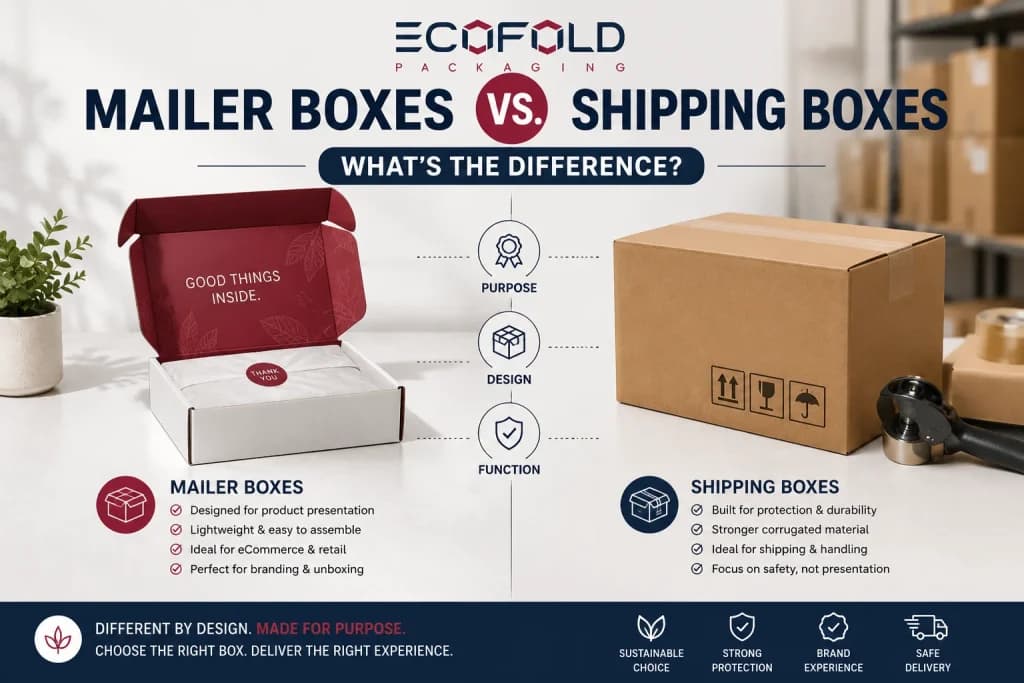
Two brands selling the same product can use entirely different box formats and both can be right. Which format fits depends on the product weight, how it ships, whether the box is part of the customer experience, and what level of protection the journey requires.
Pick the wrong one and the cost shows up as damaged products, oversized freight charges, or a flat unboxing moment that undermines a branded first impression.
The difference between mailer boxes and shipping boxes is not obvious from the outside. Both are corrugated. Both fold flat before assembly. The distinction is in how they close, what they are built to handle, and what job they are actually doing.
What Is a Mailer Box?
Mailer boxes are self-locking corrugated boxes, typically built from single-wall E-flute board. The lid folds inward and locks without tape. This is the roll-end tuck-top construction most common in ecommerce and subscription packaging.
The exterior surface is cleaner than a standard shipping box, which makes full-color printing more practical. The interior can also be printed, which is what drives the unboxing experience brands design around.
Mailer boxes are designed for lighter products, typically under 10 pounds, that do not require heavy structural protection in transit. They are common in cosmetics, apparel, gifts, specialty food, and direct-to-consumer subscription programs.
The self-locking closure also serves as a tamper signal: if the box arrives open, something happened in transit. Brands using mailer boxes as part of a gifting program can also explore our Custom Gift Boxes range for two-piece and premium-presentation builds.
What Is a Shipping Box?
Shipping boxes are the standard regular slotted container (RSC): four side panels with overlapping top and bottom flaps that seal with tape. This is the box format that built the carrier network.
Single-wall, double-wall, and triple-wall corrugated options cover everything from lightweight retail products to heavy-duty industrial shipping. The flap construction, while less visually clean than a mailer box, is structurally robust and easier to seal at production-line speed.
Shipping boxes are built for compression, drop testing, and the variable handling of carrier transit. They suit heavier products, fragile items that need room for protective inserts, bulk wholesale shipments, and any product that needs to survive longer or multi-stop delivery routes.
Corrugated Boxes in double-wall and heavy-duty grades are the standard for products where damage in transit is the primary concern.
Mailer Boxes vs Shipping Boxes: Quick Comparison
This mailer boxes vs shipping boxes breakdown covers the five most practical decision factors for ecommerce and retail brands.
| Factor | Mailer Boxes | Shipping Boxes |
| Best for | Branded ecommerce orders and DTC delivery | Shipping protection, heavier products and bulk orders |
| Structure | Self-locking, no tape required | Overlapping flaps, tape-sealed |
| Branding | Full exterior and interior print, strong unboxing value | Practical exterior print, functional shipping focus |
| Protection | Light to medium, up to 10 lbs for most formats | Medium to heavy, double-wall for fragile or bulky products |
| Common use | Cosmetics, gifts, apparel, subscriptions | Fragile goods, wholesale orders, heavier retail products |
When Should You Use Mailer Boxes?
Use mailer boxes when the packaging is part of the product experience, not just the delivery method. Cosmetics brands that want the customer to feel the brand before they see the product.
Subscription boxes where the reveal is the moment. Apparel brands where the box is photographed and shared. Gift brands where the unboxing is what the recipient actually gets.
Mailer boxes also work well for ecommerce brands shipping lightweight products where tape-free sealing and a clean exterior print reduce cost and improve presentation at the same time.
Custom Retail Boxes paired with a mailer outer can give retail-ready presentation on the shelf and ecommerce-ready delivery at the same time, using the same branded carton in both channels.
When Should You Use Shipping Boxes?
Use shipping boxes when protection is the first priority. Heavier products that would stress the self-locking panel of a mailer. Fragile items in glass, ceramics, or electronics that need internal cushioning and a structurally stronger outer wall.
Wholesale orders shipping multiple items per box. Products with longer delivery routes or multi-transfer journeys where the box will face more handling.
Shipping boxes also allow for custom internal configuration. A double-wall corrugated box with die-cut cardboard dividers or foam inserts is the correct setup for products that move during transit.
Custom Packaging Inserts matched to the box interior keep products in position regardless of how the outer box is handled by the carrier.
Can You Use Both at the Same Time?
Yes, and it is a practical approach for premium ecommerce brands. A branded mailer box provides the unboxing moment inside a plain corrugated outer shipping box that absorbs the transit punishment. The customer receives a clean, printed box that looks exactly as intended. The outer box takes the drops, the compression, and the warehouse handling.
This combination adds cost per shipment, which is worth understanding before building the budget. For brands evaluating whether the investment makes sense, our guide on Custom Packaging Cost in 2026 covers how box structure affects total packaging cost. If the material choice between box types is also part of the question, our Kraft vs Corrugated Boxes guide explains those material differences in plain terms.
The Final Call: Mailer or Shipping Box?
Use a mailer box when the packaging is part of what you are selling. Use a shipping box when the product needs structural protection to survive delivery. Use both when the product is fragile or high value and the unboxing moment matters.
Most ecommerce brands settle into a consistent format once they have shipped a few hundred orders and know where the product takes damage and where the customer engages with the box.
Getting the format right early reduces reprints, reorders, and damaged product credits. For brands reviewing the full range of Custom Packaging Boxes in USA across box types, materials, and structures, EcoFold covers the full format range for retail, ecommerce, and specialty product lines.
Frequently Asked Questions
What is the main difference between mailer boxes and shipping boxes?
Mailer boxes are self-locking corrugated boxes designed for branded ecommerce delivery and lighter products. Shipping boxes use overlapping flaps sealed with tape and are built for stronger protection, heavier products, and longer carrier transit.
Which box is better for ecommerce orders?
Mailer boxes are the standard for direct-to-consumer ecommerce where branding and unboxing experience matter. For heavier or fragile products, a shipping box with internal inserts is the correct choice, or a mailer inside a shipping box for premium builds.
Do mailer boxes need tape to close?
No. Mailer boxes use a self-locking roll-end tuck-top construction that closes without tape. This makes them faster to pack and creates a cleaner exterior surface for printing.
Are shipping boxes better for fragile products?
Yes. Shipping boxes in double-wall corrugated grades with proper internal inserts provide significantly more protection for fragile items than standard single-wall mailer boxes. The flap and tape seal also holds better under compression.
Can branded mailer boxes be used inside a shipping box?
Yes. This is a common approach for premium ecommerce brands: the mailer provides the unboxing experience and the outer shipping box absorbs the transit handling. The added cost per shipment should be factored into the packaging budget from the start.