
Guides
Kraft vs. Corrugated Boxes: Most Brands Choose Wrong
By Ahmad Shoukat · July 7, 2026
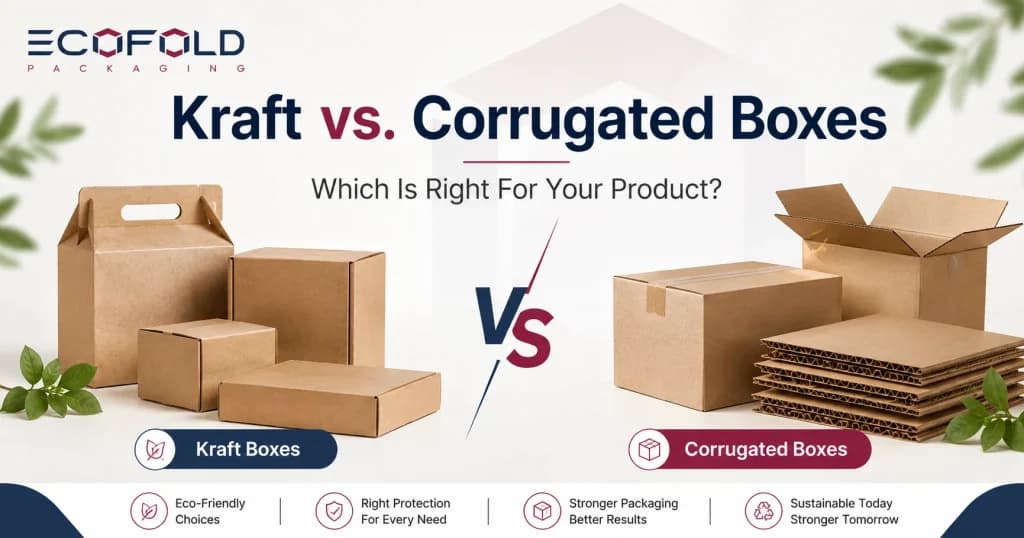
The mix-up happens because both materials look similar. Brown paper, a recyclable feel, a natural surface. A soap brand orders kraft cartons and assumes they will work for ecommerce shipments. The product arrives dented. Or a gift brand orders corrugated, the walls feel industrial, and the cost goes up for a box that should have been kraft from the start.
Both kraft packaging and corrugated packaging are paper based. Understanding the difference between kraft and corrugated boxes before specifying a material saves a reorder, and often saves money.
What Are Kraft Boxes?
Kraft paper comes from a pulping process that retains more natural wood fiber strength than standard paper production. This gives it the characteristic brown color and a tougher construction per unit weight. Kraft boxes are single-layer constructions, one layer of paper or paperboard, typically 14pt to 18pt for retail cartons, folded into a box shape.
Kraft works well for lightweight products under 2 to 3 pounds that sit on a shelf rather than ship as standalone packages. The natural surface prints cleanly, communicates an artisan or eco-conscious brand identity, and costs less per unit than corrugated for these applications. Common uses include soaps, bakery items, small gifts, cosmetics, and apparel. Brands looking for a natural paper look for retail and gift products often start with Kraft Boxes because the aesthetic fits before a print decision is made.
What Are Corrugated Boxes?
Corrugated board is a three-layer construction: two flat liner sheets with a fluted, wavy middle layer bonded between them. The flutes create structural strength through geometry, distributing force across the wave pattern rather than concentrating it at a flat surface. This allows corrugated to handle top-load compression, impact from drops, and transit vibration that single-layer paperboard cannot survive.
Flute grades range from E-flute, which is thinner with better print quality and used for retail corrugated, to C-flute for standard shipping, to double-wall for heavy products. The outer liner can be kraft brown or white-coated. White liner produces sharper print results and is standard for branded ecommerce boxes. For shipping and product protection, Corrugated Boxes provide the structural performance that kraft cartons are not built to deliver.
Kraft vs. Corrugated Boxes: Quick Comparison
This kraft boxes vs corrugated boxes table covers the six most practical factors for making a packaging material decision.
| Factor | Kraft Boxes | Corrugated Boxes |
| Best for | Retail presentation and in-store display | Shipping, ecommerce, and product protection |
| Structure | Single layer of paper or paperboard | Three-layer sandwich with a fluted inner core |
| Strength | Light to medium, suitable up to 2 to 3 lbs | Medium to heavy, handles shipping loads and stacking |
| Look | Natural, clean, artisan aesthetic | Practical and structured, more industrial on brown liner |
| Common uses | Bakery, soaps, gifts, small cosmetics, apparel | Ecommerce, shipping, glass, heavier products, bulk |
| Print quality | Smooth surface, clean CMYK and fine detail | Better on white liner, softer on brown liner |
When Should You Choose Kraft Boxes?
Kraft is the right material when the packaging sits on a retail shelf or display counter, the product is lightweight, and the box is not shipping as a standalone carrier package. Soaps, handmade candles, bakery items, small cosmetics, gift products, and lightweight apparel all fit this profile.
The single-layer construction costs less per unit than corrugated for these applications and delivers the natural look those brands want. Food brands packaging dry goods and baked items for retail use kraft for the same reason: the aesthetic matches the brand and the product weight does not require more than paperboard can provide.
Custom Food Boxes for bakery, snack, and specialty retail food products are a common example of where kraft is the practical first choice.
When Should You Choose Corrugated Boxes?
Corrugated belongs wherever the product ships as a standalone package, weighs more than 3 to 5 pounds, or needs to survive stacking in a warehouse or fulfillment environment. Ecommerce brands, subscription box programs, glass and fragile product shippers, and brands distributing heavier items through retail channels should default to corrugated.
If a product also needs clean retail presentation, the practical solution is a corrugated outer for transit with a kraft or specialty retail carton inside. Custom Retail Boxes can be paired with a corrugated outer as part of a full packaging program for brands that need to perform in-store and survive shipping.
Which Is Better for Shipping?
Corrugated. The fluted structure is built for the forces products face in transit: top-load compression, impact from drops, and lateral pressure in packed vehicles. A tuck-end kraft carton is not a suitable standalone shipping container for most products.
Brands shipping products inside kraft packaging typically need a corrugated outer to protect the retail carton during transit. This is not a workaround — it is the standard industry approach for products that need to present well at retail and also ship direct to consumers.
Which Is Better for Eco-Friendly Packaging?
Both materials are paper based and recyclable. Corrugated has one of the highest recovery rates of any packaging material in the US, above 90 percent commercially. Kraft paperboard is widely recyclable when uncoated or finished with aqueous rather than plastic laminate.
Neither is inherently more eco-friendly. The honest answer depends on whether the material matches what the product actually needs. An undersized kraft carton on a product that requires corrugated leads to damage and a replacement shipment, which carries a bigger environmental cost than the extra board weight. Brands actively evaluating recyclable and paper-based options across their product range can explore our Custom Eco Friendly Boxes range for a broader view of kraft, paperboard, and sustainable material choices.
Final Decision: Kraft or Corrugated?
Choose kraft when:
- The product sits on a retail shelf and is not shipped standalone
- Natural, artisan, or eco-conscious brand look is a priority
- The product is light, under 2 to 3 pounds
- Bakery, soap, small cosmetics, gift, or apparel packaging
Choose corrugated when:
- The product ships via UPS, FedEx, or USPS in the box itself
- The product is heavy, fragile, or needs stacking support
- Ecommerce, subscription box, or direct-to-consumer delivery
If the product needs both, use corrugated for the outer and kraft for the inner retail carton. For brands looking at the full range of packaging options alongside this decision, EcoFold provides Custom Packaging Boxes in USA across retail, ecommerce, food, and specialty product lines.
Frequently Asked Questions
What is the main difference between kraft and corrugated boxes?
Kraft uses a single layer of paper or paperboard. Corrugated has a three-layer construction with a fluted middle layer for significantly more structural strength. Kraft is for retail presentation; corrugated is for shipping and protection.
Are kraft boxes strong enough for shipping?
Generally, no. Kraft cartons are suited for retail and point-of-sale use, not standalone carrier shipping. For shipping, corrugated is the correct structural choice.
Are corrugated boxes better for heavier products?
Yes. The fluted construction handles product weights and compression loads that kraft paperboard cannot support. For products over 3 to 5 pounds, corrugated is the right material.
Which box type is better for eco-friendly packaging?
Both are recyclable. Corrugated has very high commercial recovery rates in the US. The more useful question is whether the material matches the product’s needs. Using the wrong material leads to damage, replacements, and a higher environmental cost overall.
Should I choose kraft or corrugated for retail products?
If the product sits on a shelf and does not ship standalone, kraft usually offers better visual presentation at a lower cost. If the retail product also ships direct to consumers, a corrugated outer with a kraft inner carton is usually the most practical solution.