
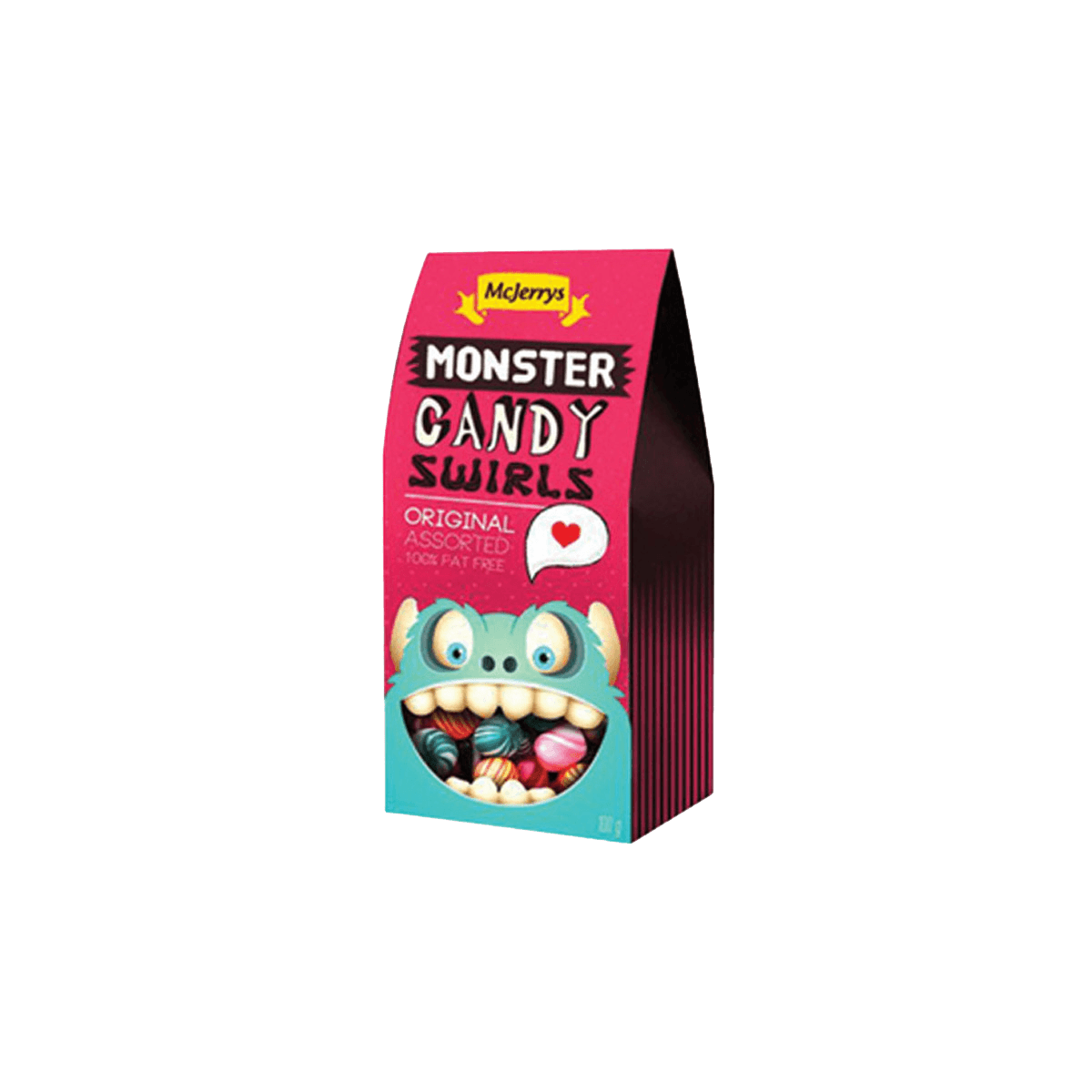
Custom Food Boxes

Custom food boxes for pizza, bakery, takeout, and CPG brands in the USA.

Custom Food Boxes

Custom food boxes for pizza, bakery, takeout, and CPG brands in the USA.

GET A FREE QUOTE

Let’s Build Your Perfect Packaging

Send your box style, dimensions, material, and quantity. EcoFold returns a full quote with material and finish options within 24 hours.


    Maximum file size 2 MB.(jpg,jpeg, png, gif, doc, pdf, ai)

    Custom Food Boxes for Restaurants, Bakeries, and Food Brands in the USA

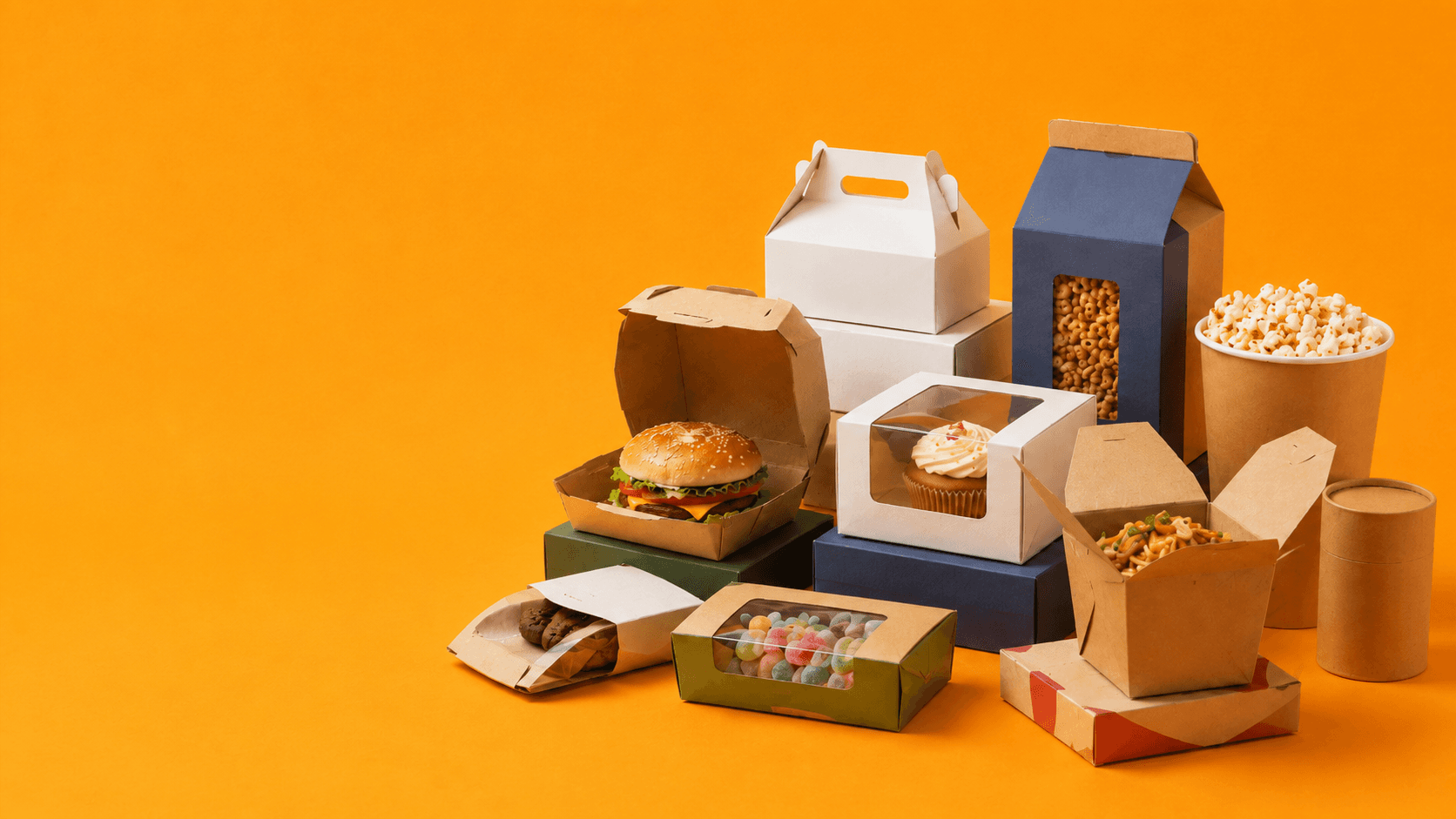
    Custom food boxes are printed packaging built to hold, serve, and ship food products in retail, takeout, and direct-to-consumer channels. They cover pizza boxes, burger boxes, popcorn boxes, takeout cartons, bakery boxes, donut boxes, and snack packaging used by restaurants, food trucks, bakeries, and consumer packaged goods brands across the United States. Most food boxes are printed on FDA-compliant kraft paper, corrugated cardboard, or grease-resistant SBS cardstock, and the most common styles are tuck-end cartons, gable boxes, pillow boxes, and corrugated mailers. EcoFold prints custom food boxes to any size starting at 100 units with free design support, no die or plate charges, and an 8 to 10 business day US turnaround.

    Why custom food packaging matters for US food brands?

    A generic white pizza box does its job once: it gets the food home. A custom-printed food box does five jobs at the same time. It protects the product through grease, heat, and stacking. It carries the brand name where a customer sees it during the entire meal. It signals quality before the box is even opened. It meets local US food packaging rules. And it hands delivery and Instagram a piece of free brand exposure.
    For a small US food business, that translates to real dollar impact. A pizza shop in Brooklyn switching from plain corrugated to a printed kraft pizza box typically sees order frequency tied to brand recall climb inside two months. A bakery in Austin printing its logo on cookie boxes converts more first-time customers into repeat buyers, because the box is the only piece of marketing that travels home with them. A CPG popcorn brand fighting for shelf space at Whole Foods needs printed retail-ready cartons to even get on the shelf.
    Custom food packaging is also where US compliance gets handled. The FDA regulates food-contact materials and inks. State laws (California AB 1200, New York’s foam ban, and similar rules in Maine, Maryland, and Washington) restrict certain plastics and PFAS in food service. Sustainability-focused buyers expect FSC-certified or compostable options. Custom-printed boxes from a US supplier let a brand meet all three layers at once.

    What materials are used for custom food boxes?

    Food packaging material choice depends on the food itself: how hot it is, how greasy it is, whether it goes in a fridge or a microwave, and whether the box is single-use takeout or shelf retail.

    Material Best for Food contact notes
    Kraft paper (brown or white, 14pt to 24pt) Burger boxes, sandwich boxes, takeout cartons, bakery items FDA-compliant when virgin; pairs with grease-resistant coating
    SBS cardstock (12pt to 24pt) Donut boxes, cookie boxes, frozen food cartons, CPG retail boxes Smooth print surface; clay coating gives natural grease and moisture resistance
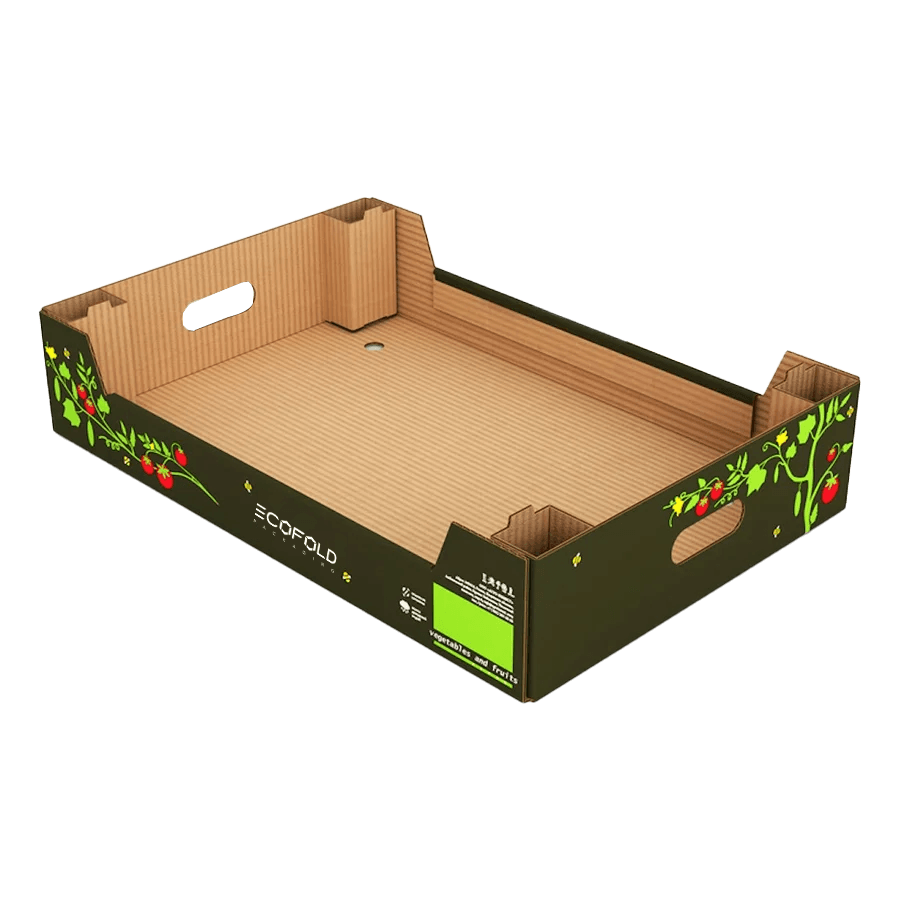
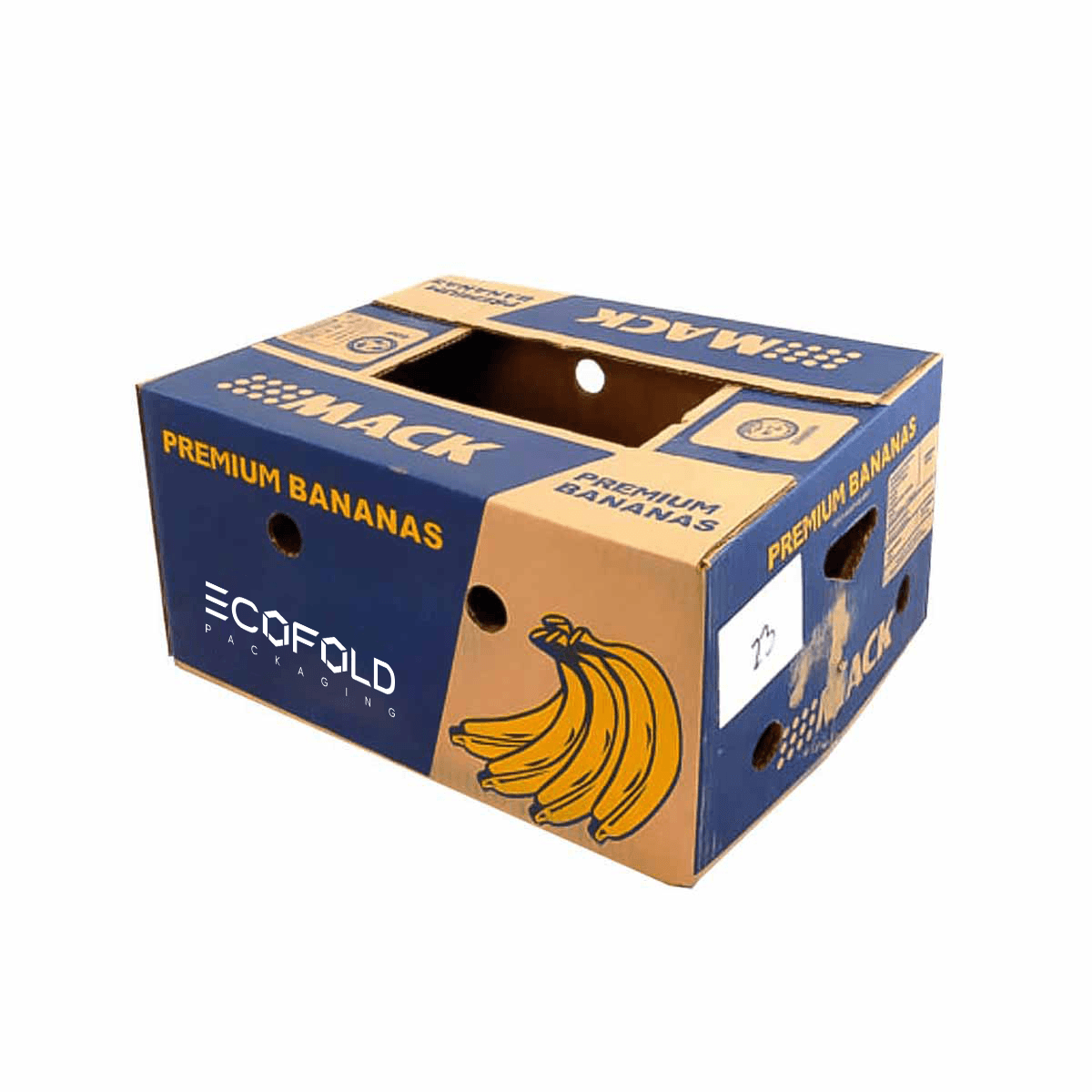
    E-flute corrugated Pizza boxes, takeout family meals, food shipping mailers Good rigidity for hot, heavy contents; prints CMYK on white-top variant
    B-flute corrugated Large pizza boxes, catering trays, shipping boxes for CPG food Thicker structure for heavier or hotter loads
    Bagasse (sugarcane fiber) Compostable takeout, salad boxes, hot food containers Naturally grease and water resistant; certified compostable
    PLA-lined or PE-coated kraft Hot drink sleeves, soup containers, ice cream tubs Lining keeps liquid in; check whether the lining is compostable or recyclable

    EcoFold prints on all of the above. The default for most takeout and bakery orders is kraft paper or SBS with food-safe water-based inks. The default for pizza, catering, and shipping is corrugated. Compostable bagasse and PLA-lined kraft are available on request for brands certifying with BPI or selling in California, Washington, and other states with foam and PFAS rules.

    What box styles work best for food packaging?

    Different foods need different structures. Here are the styles EcoFold prints most often inside the food category.

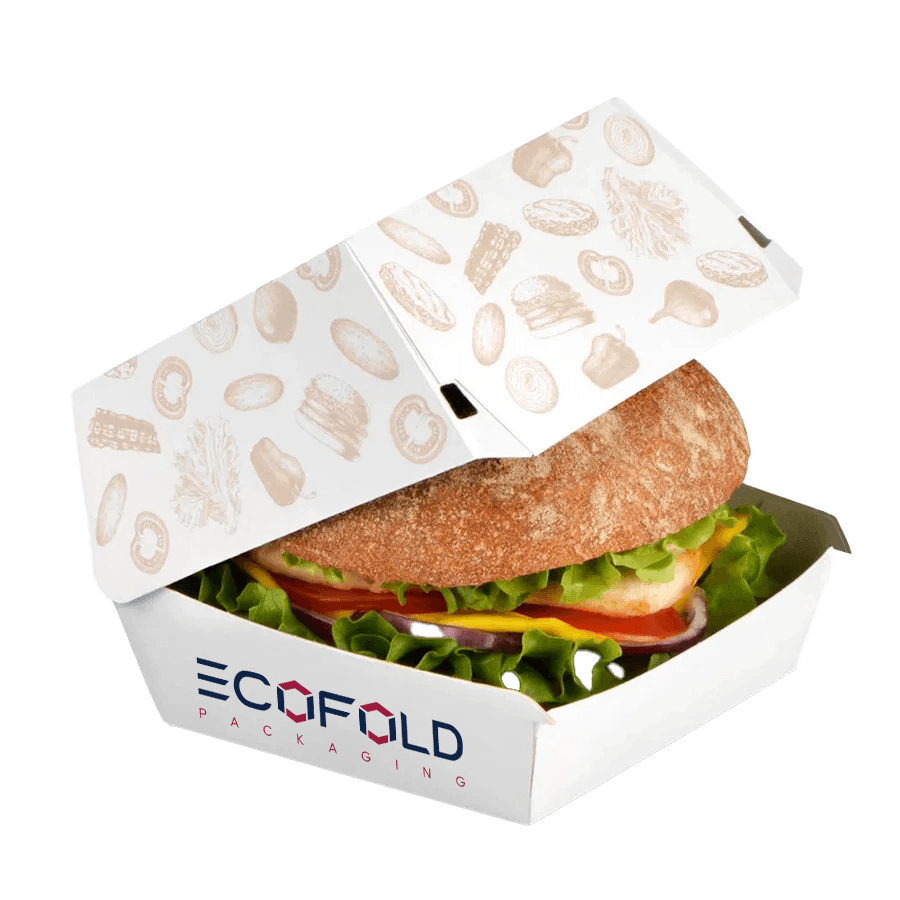
    • Pizza boxes (corrugated, square, with vent and tuck flap). Standard sizes from 7 inch personal up to 18 inch family. E-flute corrugated for personal sizes, B-flute for 14 inch and up.
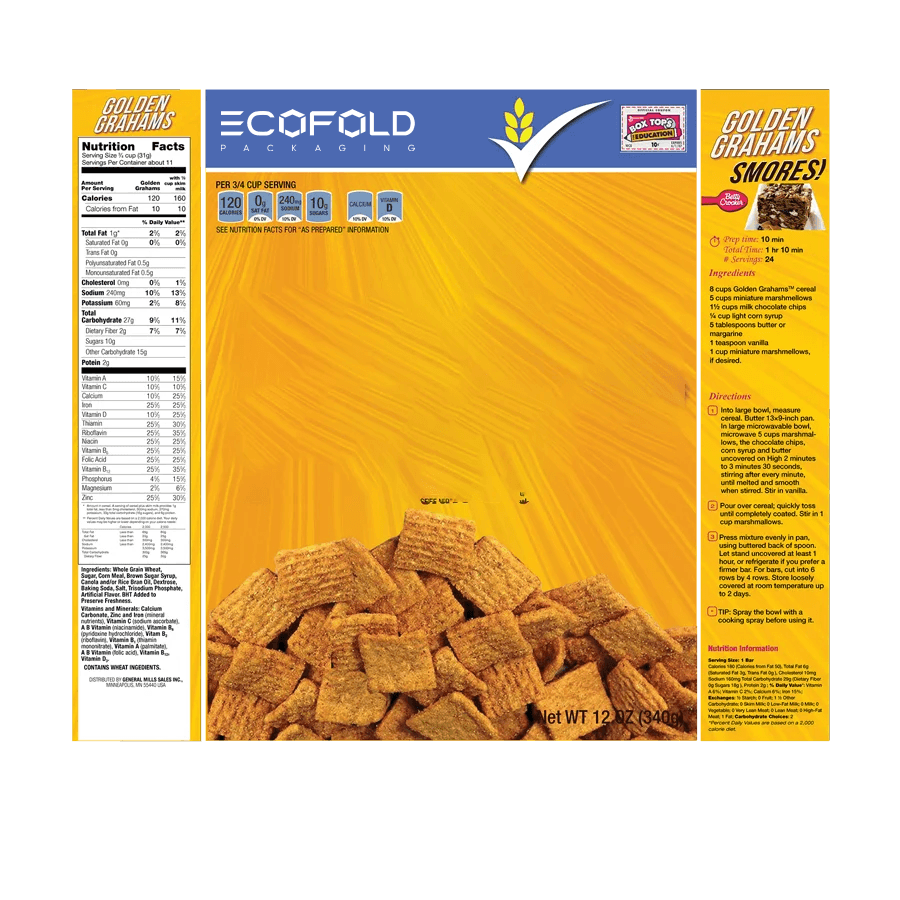
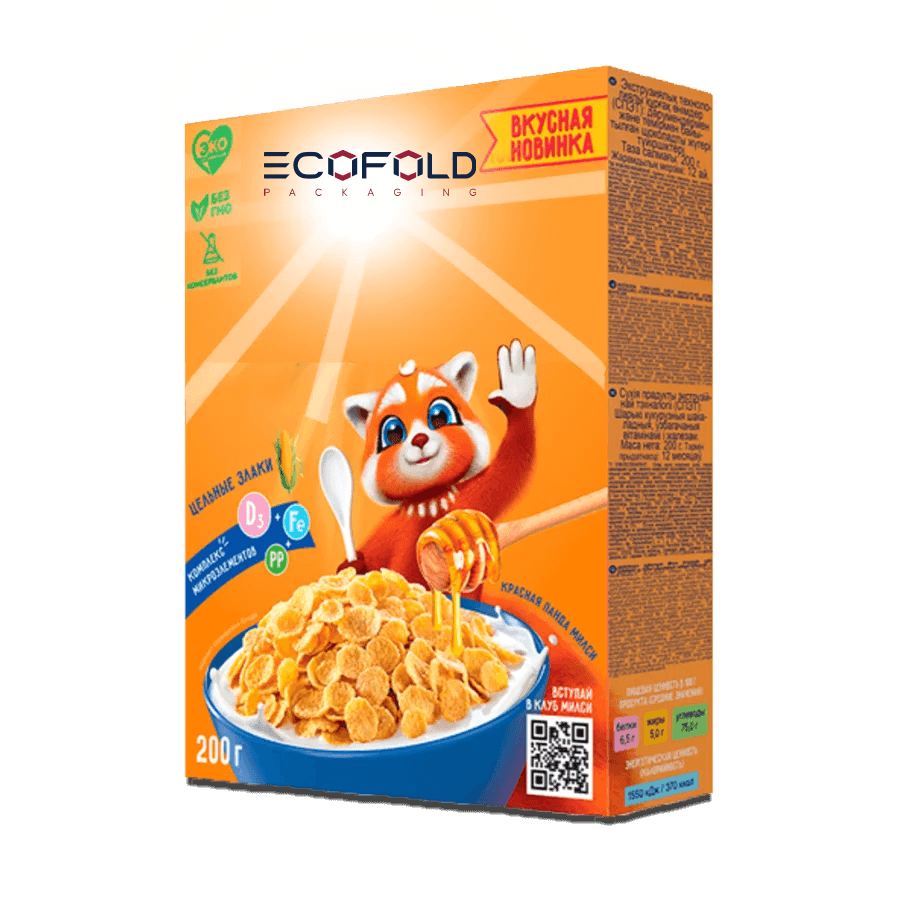
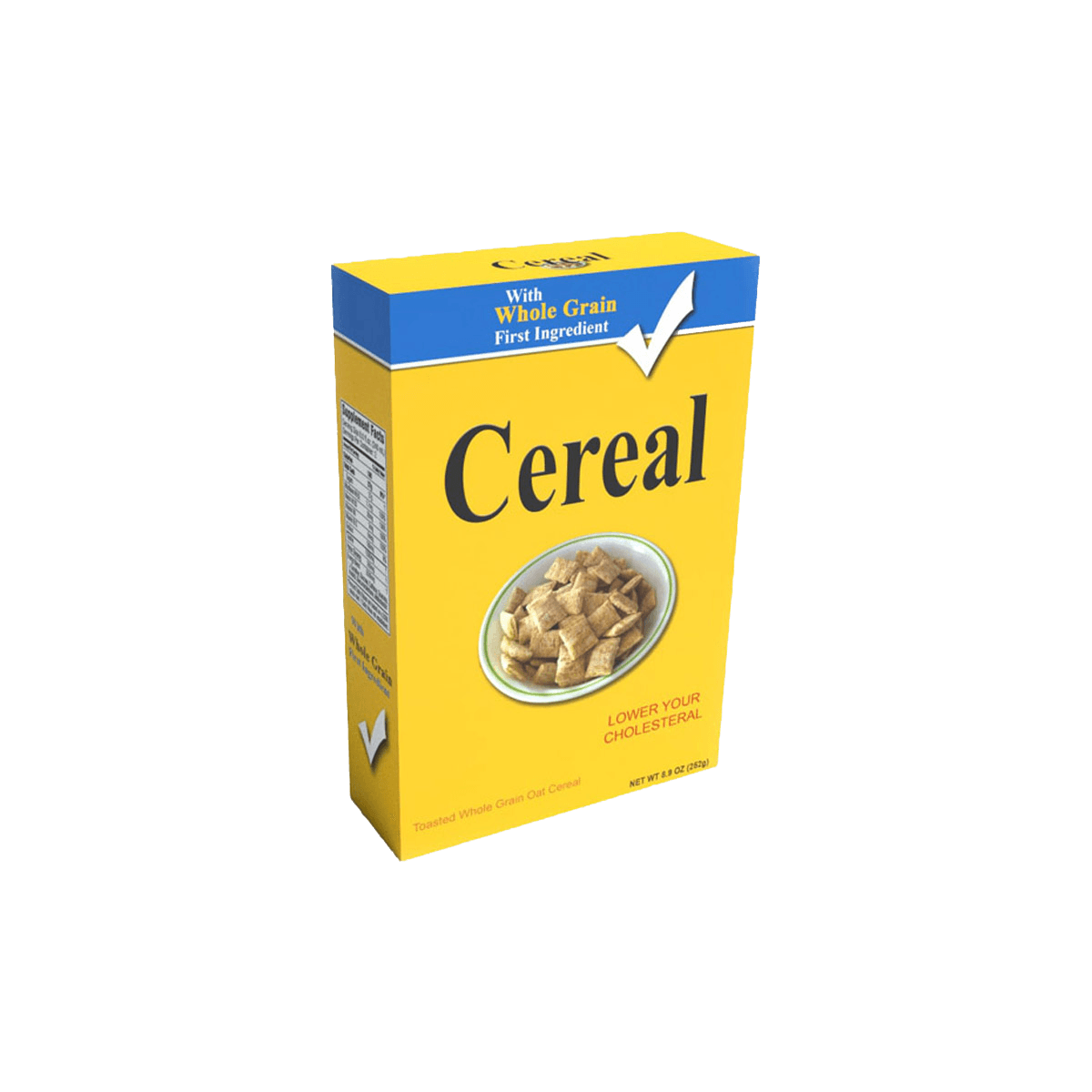
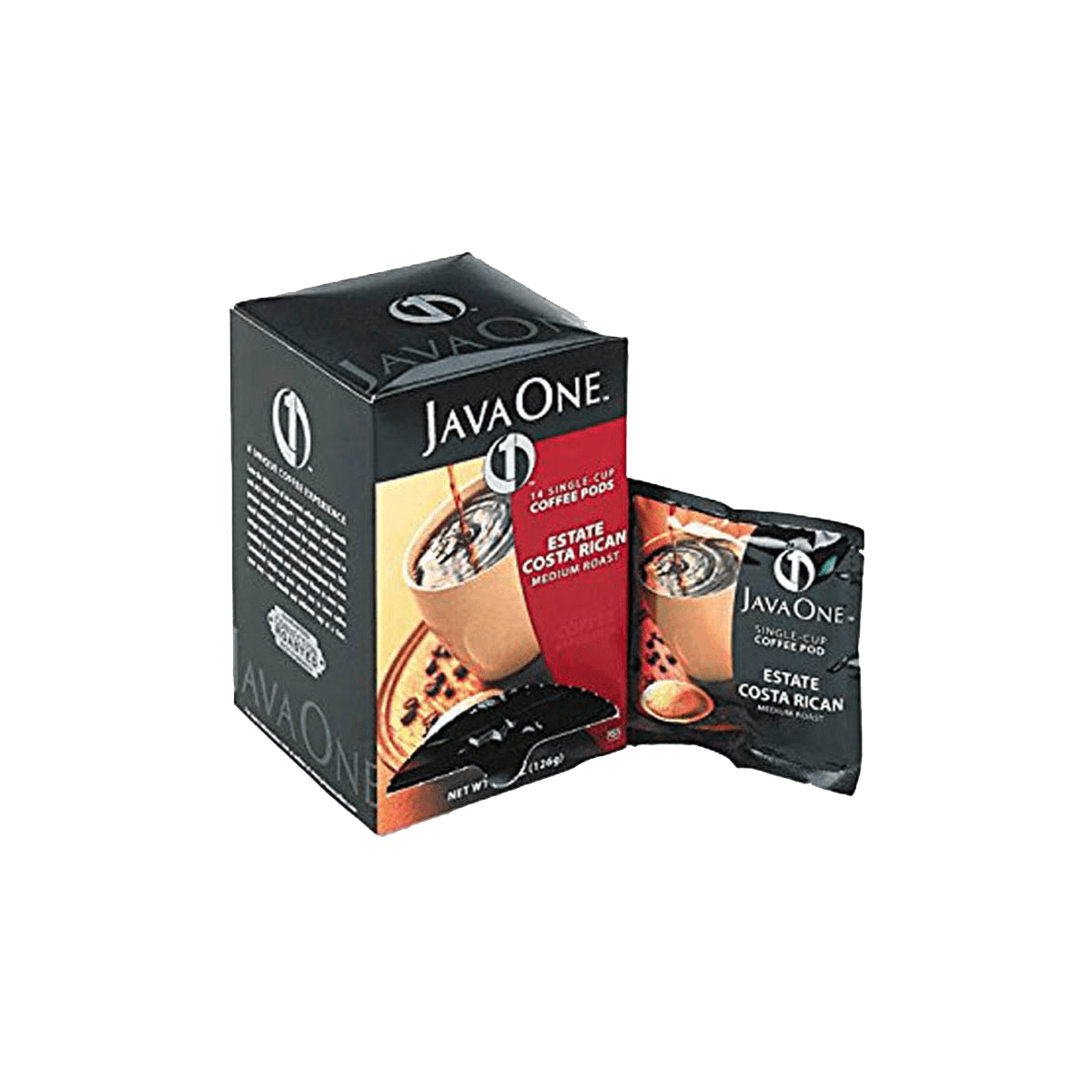
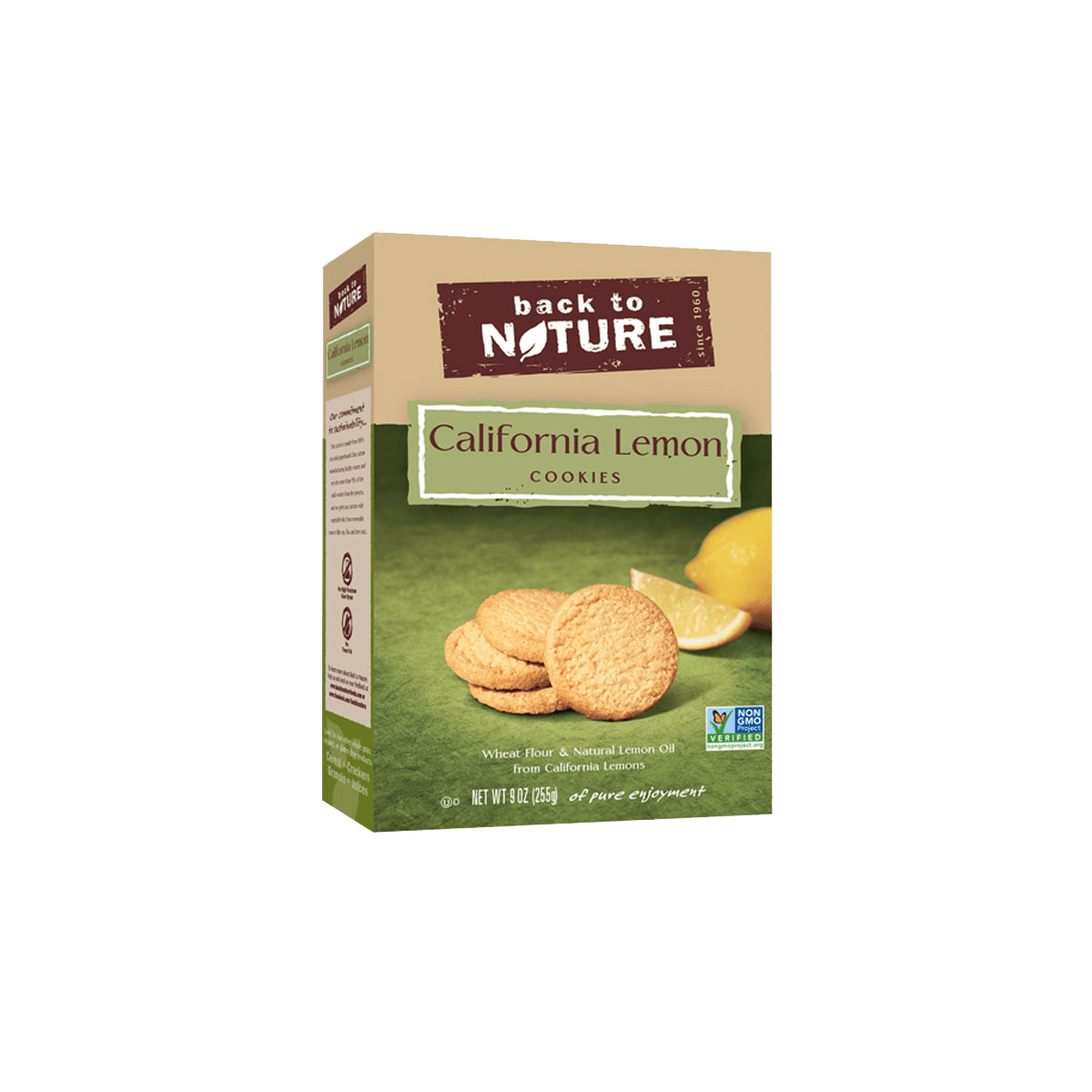
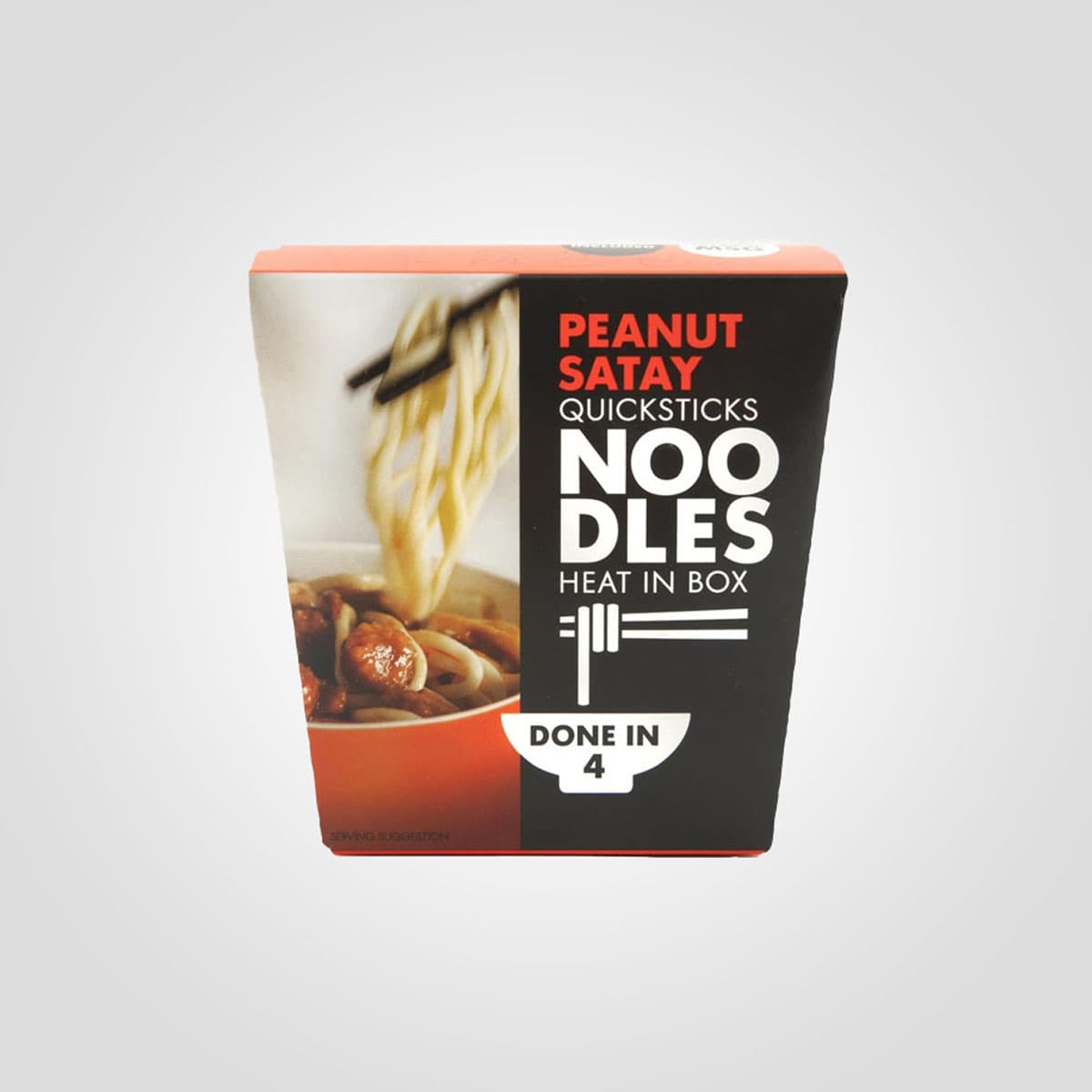
    • Tuck-end cartons (straight tuck end and reverse tuck end). The workhorse style for cookies, donuts, frozen meals, single-serve snacks, and CPG retail food. Assembles fast on a packing line.
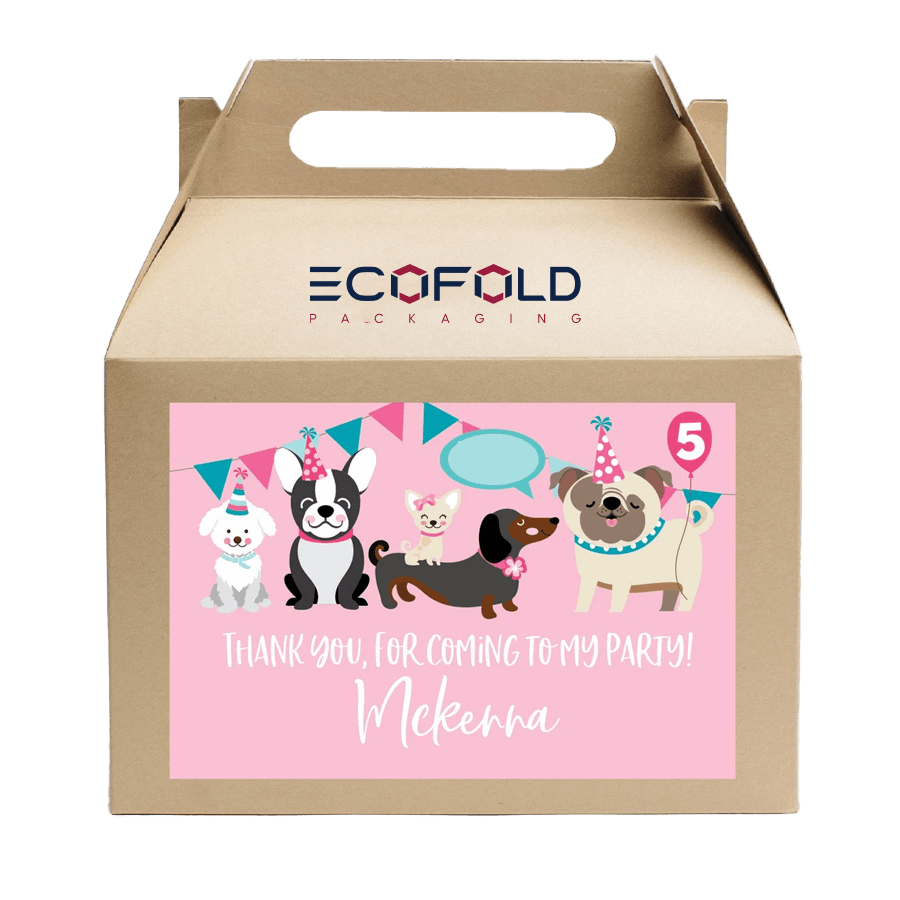
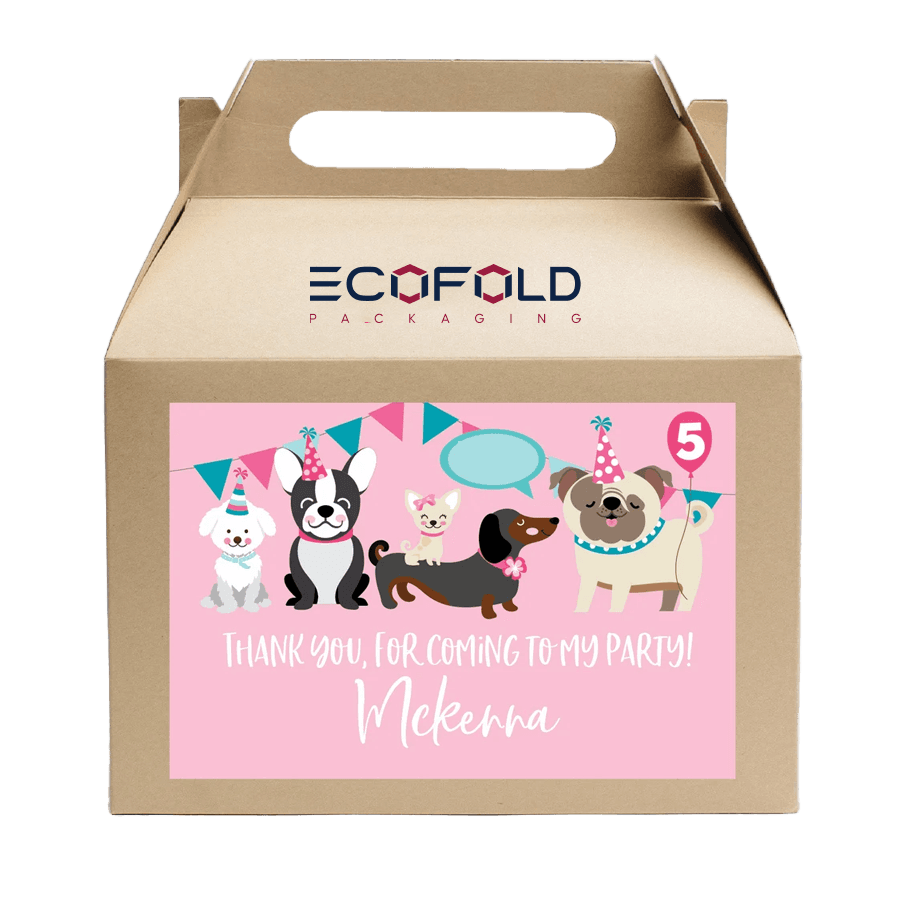
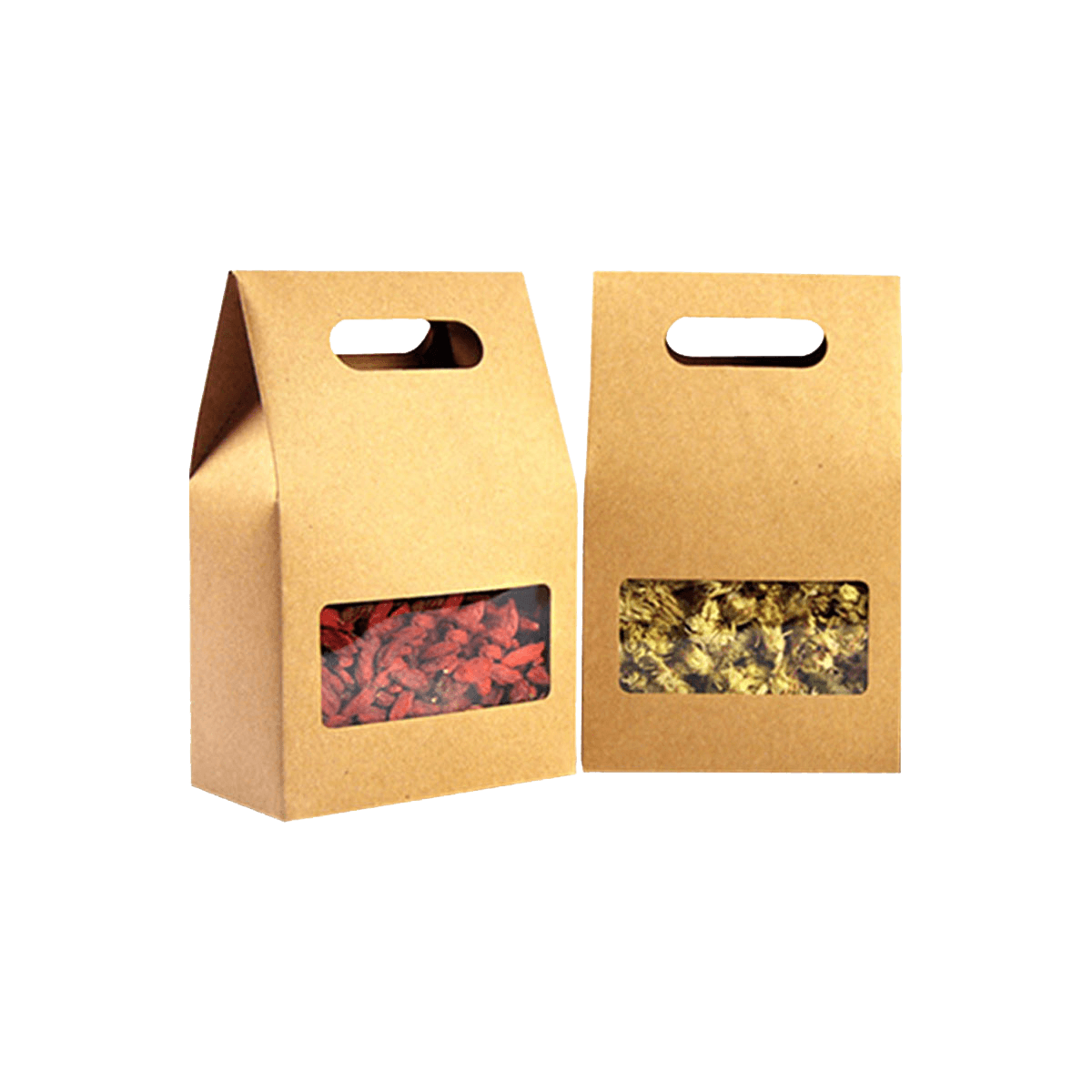
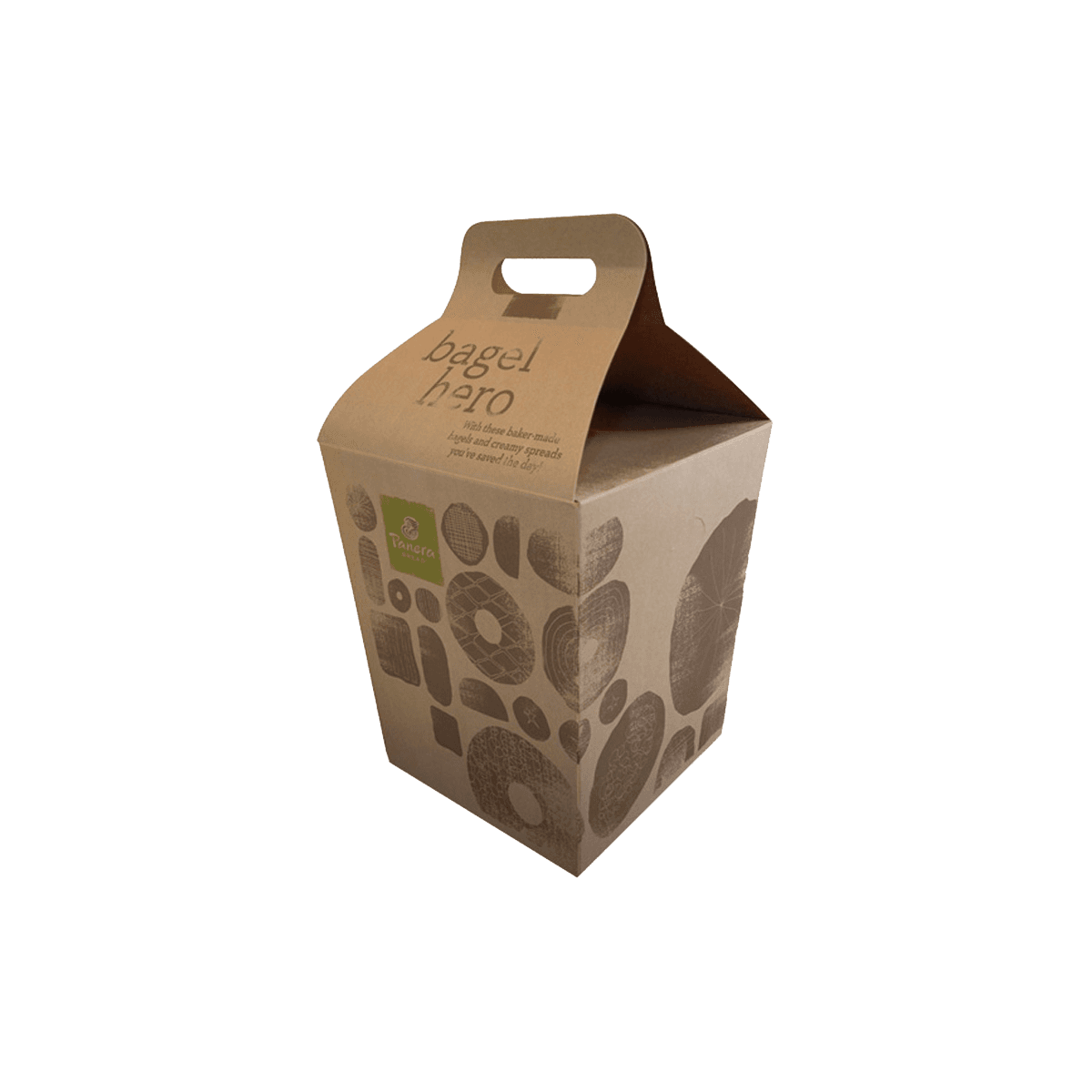
    • Gable boxes. The classic handle-top takeout box. Common for kids’ meals, catering portions, hot wings, and gift food sets.
    • Pillow boxes. Small, curved boxes for chocolates, jerky, granola samples, and trial-size snack runs.
    • Hot dog and french fry boxes. Open-top trays with branded sleeves; the format also covers chicken tenders, churros, and street-food items.
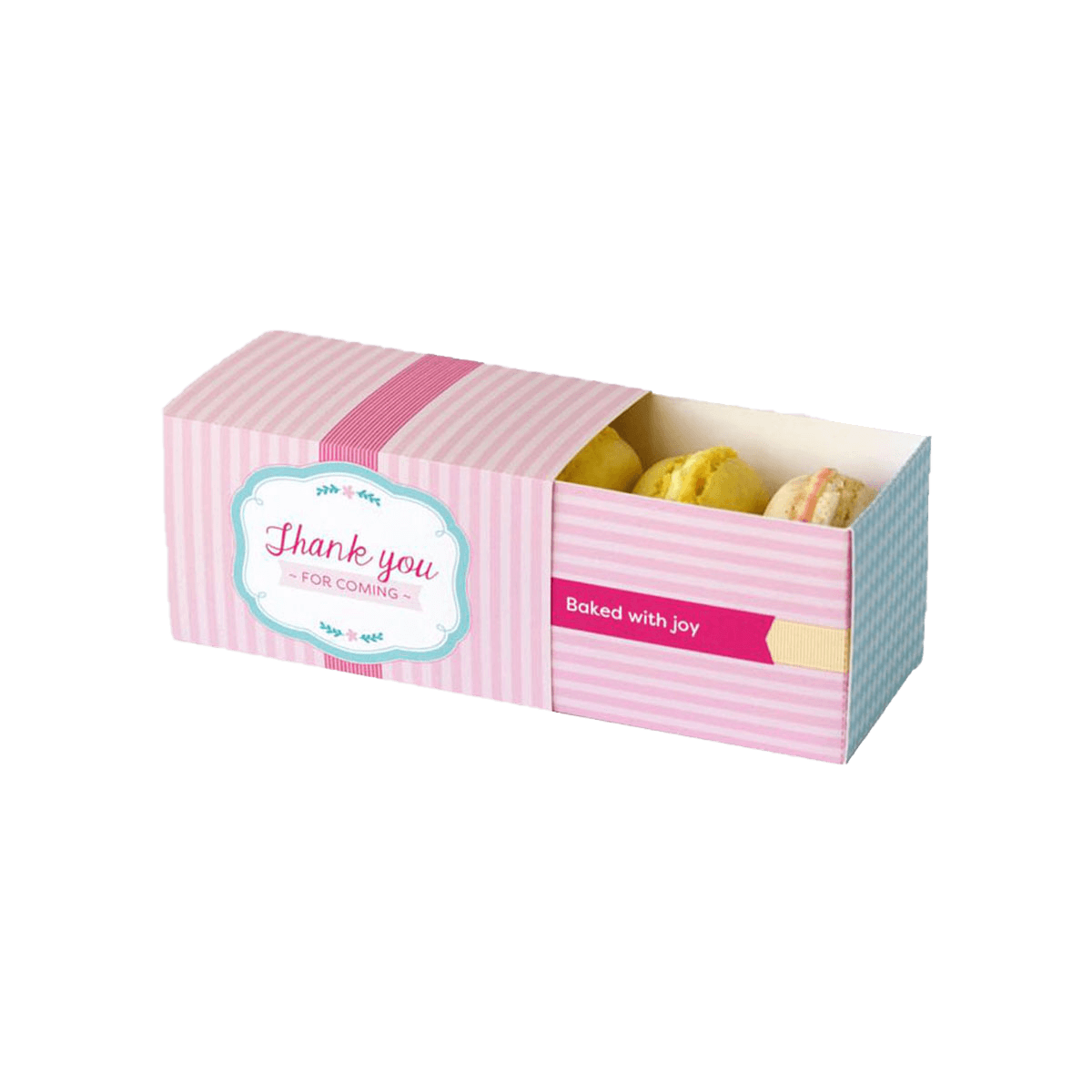
    • Auto-bottom boxes. Self-locking bottom panel for heavier products like cake boxes, bakery half-dozens, and frozen meals. Sets up faster than a 1-2-3 tuck.
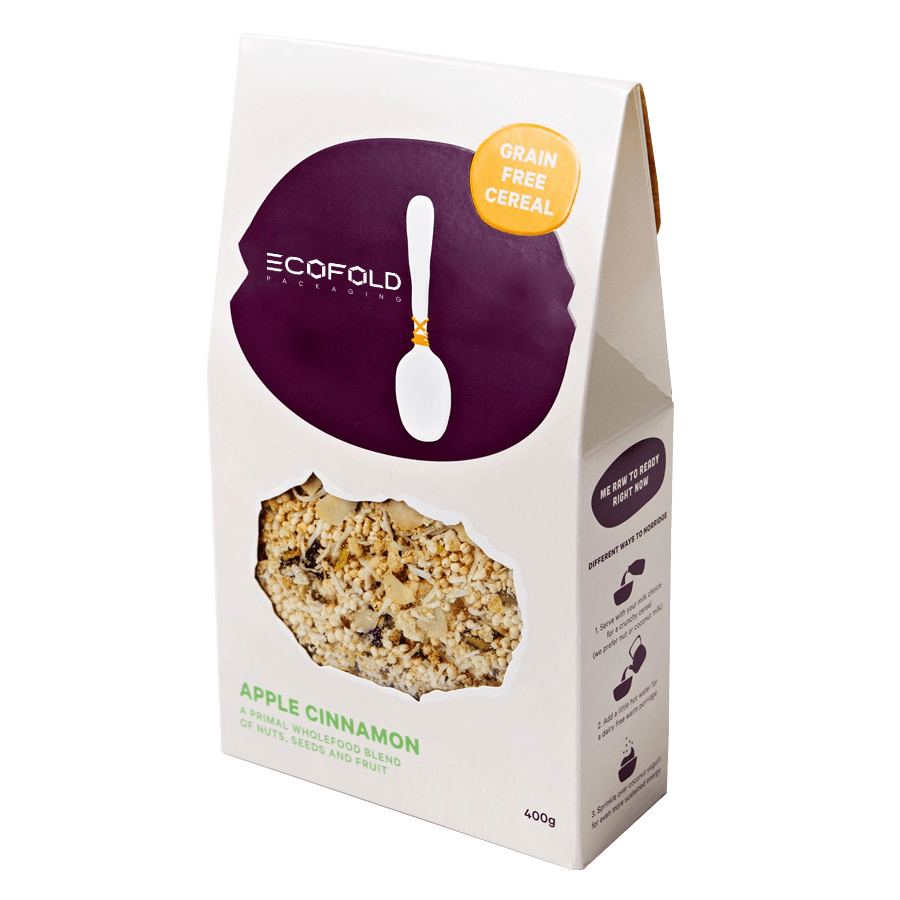
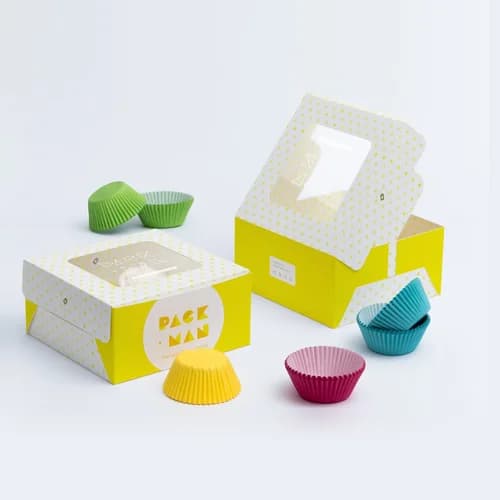
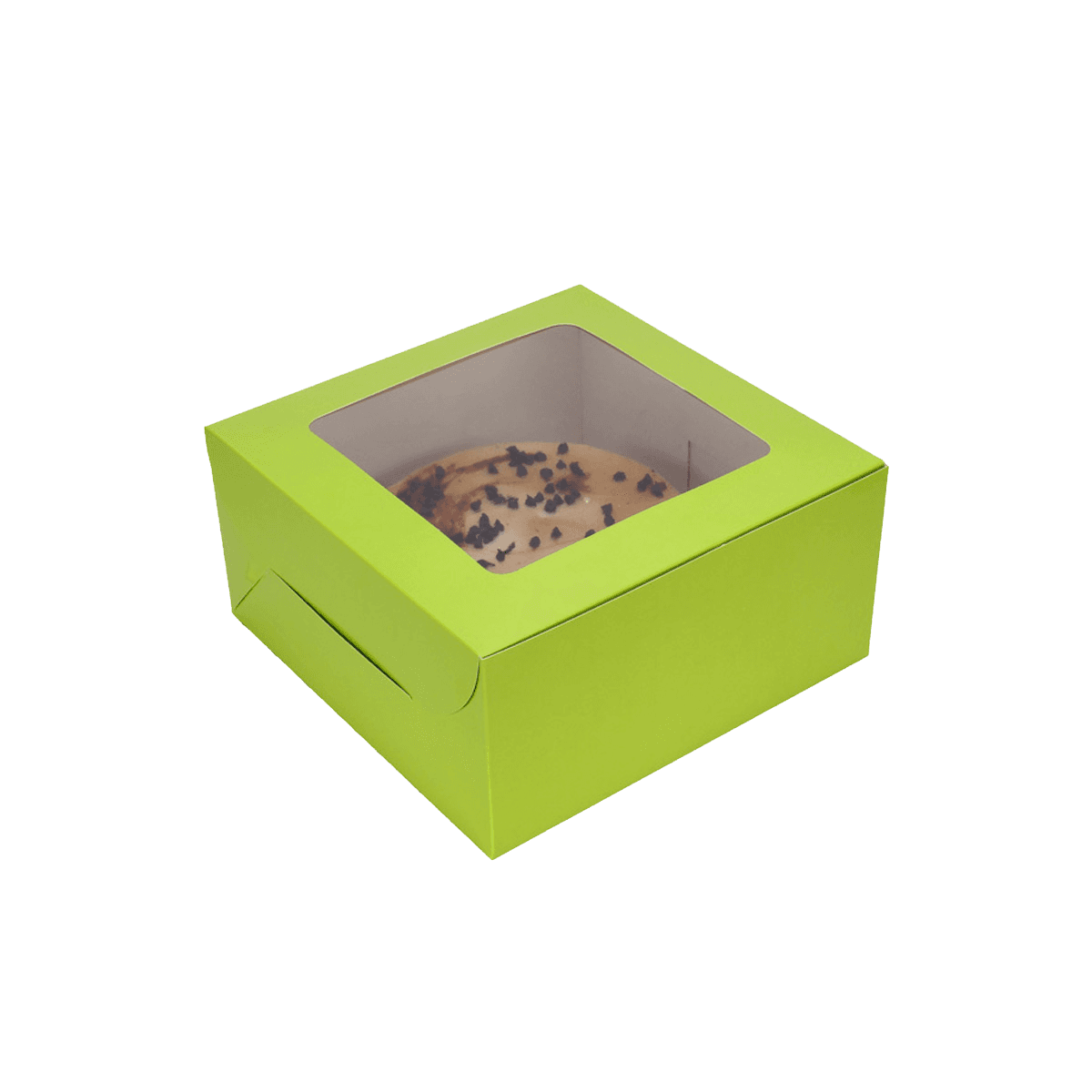
    • Window boxes. Die-cut windows with food-grade clear film for bakery items, donuts, cupcakes, and packaged snacks. Lets the buyer see the product without opening the box.
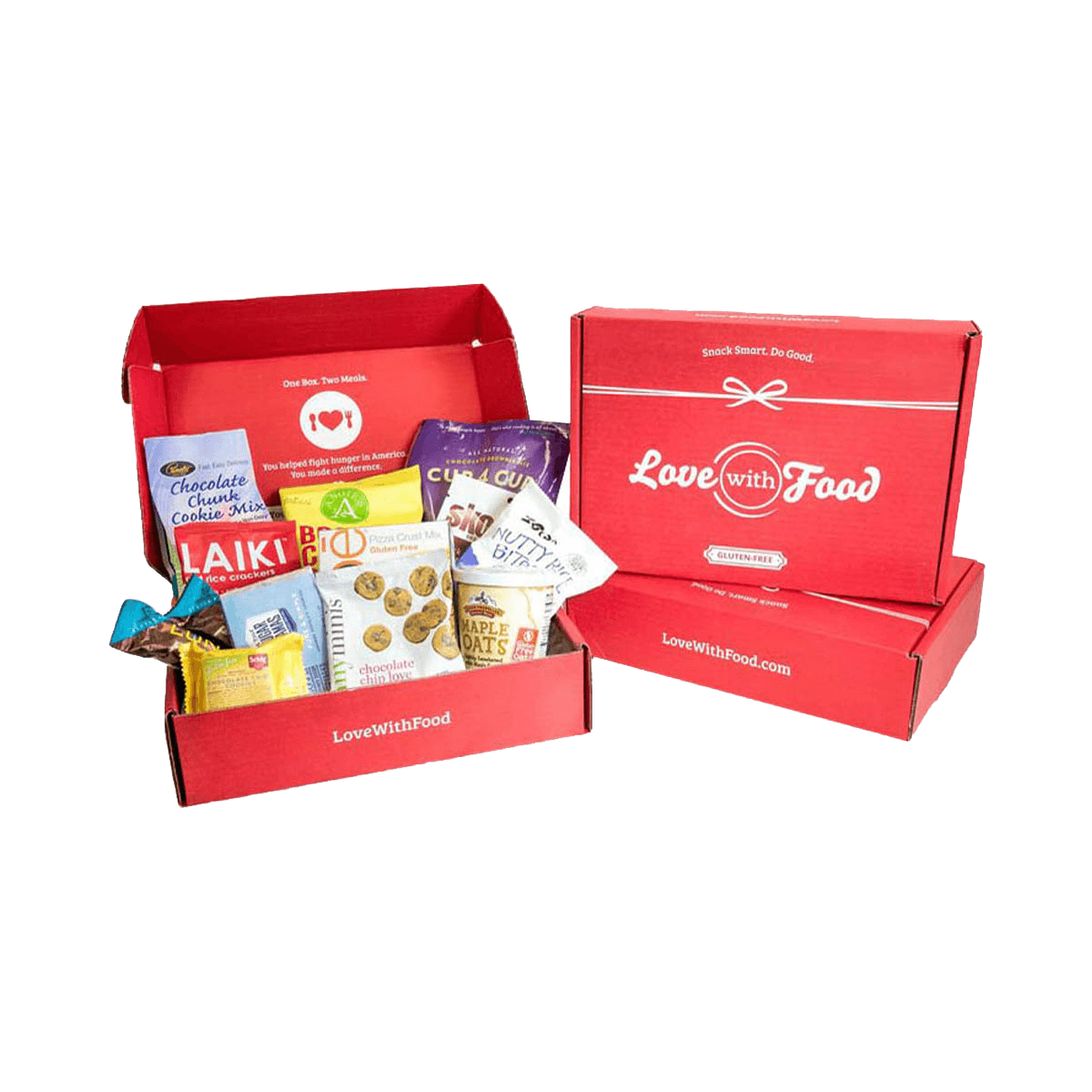
    • Mailer boxes. Roll-end tuck-top mailers for direct-to-consumer food brands shipping cookies, jerky, popcorn, or snack subscriptions through USPS, UPS, and FedEx.

    Printing and finishing options for food boxes

    Food packaging printing has one rule the rest of custom packaging does not: the inks and coatings must be food-safe. EcoFold prints food boxes using water-based and soy-based inks compliant with FDA 21 CFR 175.300 for indirect food contact, with direct-contact inner surfaces left unprinted.

    The print options:

    • Offset CMYK for orders of 500 units and up, with the cleanest color reproduction
    • Digital CMYK for shorter runs (100 to 500 units) and faster proof turnaround
    • Flexographic for very large corrugated runs, especially pizza boxes at 2,500 units and up
    • Pantone (PMS) spot color matching for brand-critical color accuracy

    The finishing options that work on food packaging:

    • Food-safe aqueous coating for light grease resistance and a soft sheen
    • Grease-resistant coating for direct-contact surfaces of burger and sandwich-style boxes
    • Gloss or matte lamination on the outer surface only (not on direct food-contact areas)
    • Soft-touch lamination for premium CPG retail food boxes
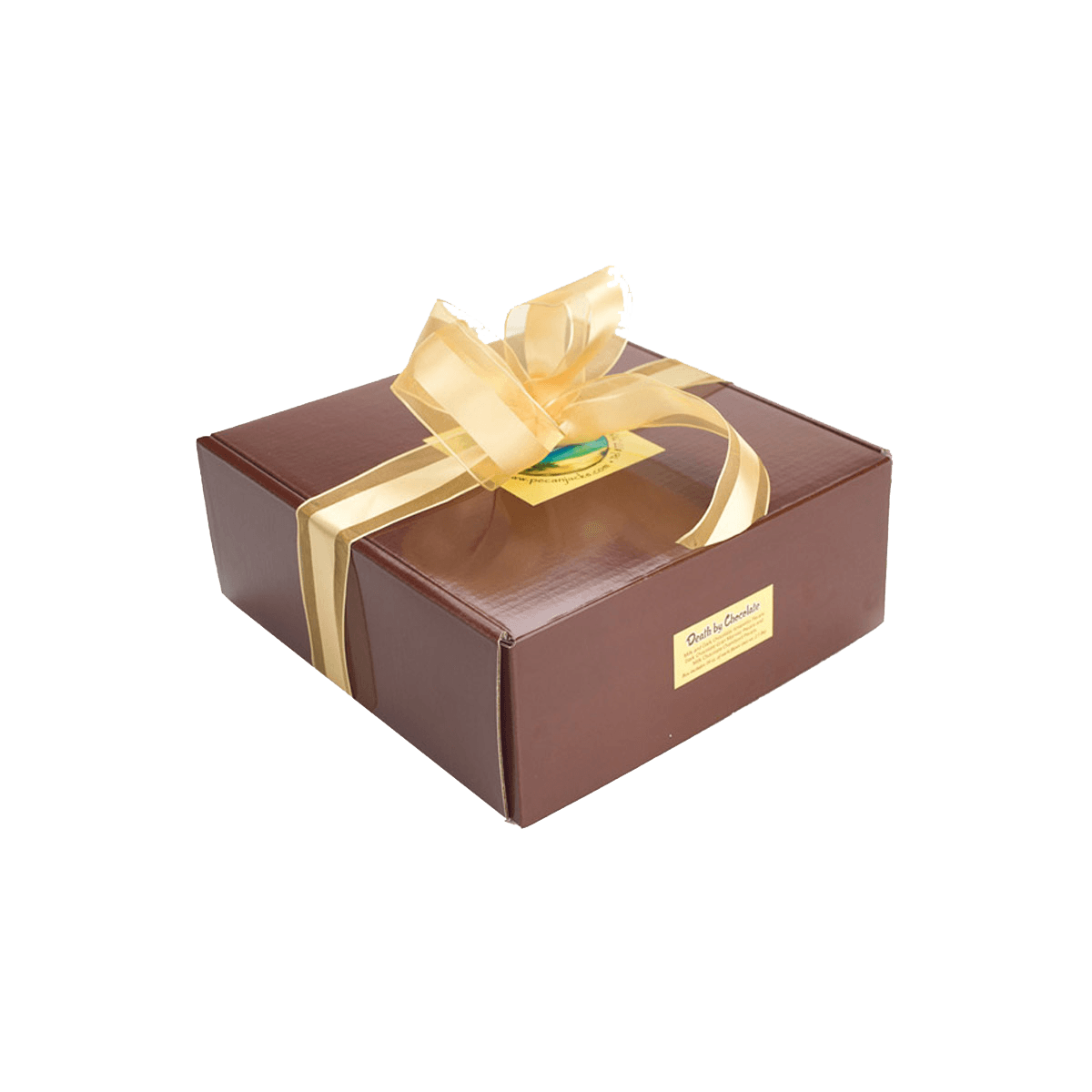
    • Spot UV and foil stamping for retail bakery, chocolate, and gift food packaging
    • Embossing and debossing for logos on premium products
    • Die-cut windows with food-grade PET or PLA clear film

    Customization options

    Every food box on EcoFold is built to spec, not picked from a fixed catalog. The variables a buyer controls:

    • Size. Any dimension from a 2 inch chocolate box to an 18 inch family pizza box.
    • Shape. Standard rectangular, square, gable, pillow, custom die-cut shapes.
    • Material thickness. 12pt to 24pt cardstock, 1.5mm rigid, single or double-wall corrugated.
    • Printing. Full CMYK, Pantone match, white ink on kraft, or single-color print to save cost.
    • Finishing. Aqueous, gloss, matte, soft-touch, spot UV, foil, embossing, debossing.
    • Closure and structure. Tuck flap, magnetic, auto-bottom, snap-lock bottom, sleeve.
    • Inserts. Cardboard dividers, foam holders, paper pulp trays, EVA inserts for delicate items.
    • Windows. Die-cut openings with food-grade clear film, sized to the product.
    • Branding extras. Logo printing, scent or burn time-style labels (for hot food, allergen info, etc.), QR codes, batch and date panels.

    US food packaging compliance and design tips

    Food packaging in the United States is regulated at three levels: federal (FDA), state (varies), and certification (FSC, BPI, ASTM). Build for all three from the start.

    • FDA 21 CFR 175 and 176. Inks, coatings, and adhesives in contact or near contact with food must be food-safe. EcoFold uses water-based and soy-based inks that meet this standard.
    • State foam and PFAS bans. California, New York, Maryland, Maine, Washington, and Colorado restrict polystyrene foam containers and PFAS-treated paperboard. If you sell food service in these states, pick kraft, bagasse, or uncoated SBS over PFAS-treated alternatives.
    • California AB 1200. Restricts intentionally added PFAS in plant-fiber food packaging. Source bagasse and molded fiber from BPI-certified or PFAS-free verified suppliers.
    • BPI compostable certification. Required for brands marketing packaging as “compostable” in many US municipal programs.
    • FSC-certified paper. Standard option for brands marketing as sustainable.

    Design tips a real food brand would actually use:

    1. Print the brand name on the top flap, not just the side panel. Customers stack boxes and see the top first.
    2. Keep the food-contact surface unprinted. It is required for FDA-direct contact and removes ink-transfer risk.
    3. Test the box with the actual product before approving a 5,000-unit run. Hot pizza, ice cream, and saucy items behave differently inside a printed box than a flat proof predicts.
    4. Add a vent on hot food boxes. Skipping vents traps steam and softens the box during delivery.
    5. Use Pantone matching on a hero brand color, especially for shelf retail. Digital CMYK can drift by 5 to 10 percent on kraft, which kills brand consistency.

    How do I order custom food boxes?

    The order process is the same as the rest of the EcoFold catalog.

    1. Send a quote request. Include food type, box style, dimensions, material preference, finish, and quantity. A photo of a similar box is enough to start.
    2. Receive a free design and dieline. The in-house team builds the dieline and a 3D mockup within 24 to 48 hours. Revisions included.
    3. Approve artwork and pay the deposit. Production starts once the file is signed off.
    4. Production and US delivery. Printing, die-cutting, gluing, finishing, and shipping run 8 to 10 business days from approval. Ships to all 50 states.

    Frequently asked questions about custom food boxes

    Are EcoFold food boxes FDA-compliant?

    Yes. Default materials, inks, and coatings used for food boxes meet FDA 21 CFR 175 and 176 for food-contact and near-food-contact use. Compliance documents are available on request for buyers who need them for retailer onboarding or food-service licensing.

    What is the minimum order quantity for custom food boxes?

    EcoFold’s standard MOQ is 100 units across most food box styles. Some highly customized sizes (large family pizza, custom-shape display boxes) may have a higher minimum based on die size. The team confirms MOQ on the initial quote.

    How long does it take to receive a custom food box order?

    Most orders ship in 8 to 10 business days from artwork approval. Large corrugated pizza runs (5,000 units and up) can run closer to 12 days. Rush production is available on request for time-sensitive launches.

    How much does a custom food box cost?

    Per-unit cost depends on material, print, finish, and quantity. A printed kraft burger box at 100 units lands roughly $0.45 to $0.80 per box. A 12-inch corrugated pizza box at 500 units lands around $0.65 to $1.10 per box. A premium SBS cookie box with window and gold foil at 100 units sits closer to $1.50 to $2.50 per box. EcoFold quotes every order with no die or plate charges, so quantity, material, and finish are the only price levers.

    Can I get compostable or eco-friendly food boxes?

    Yes. EcoFold offers FSC-certified kraft and SBS, bagasse (sugarcane fiber), and PLA-lined options. BPI-certified compostable materials are available on request for brands marketing as compostable in California, Washington, and other states with composting infrastructure.

    Can the food box be printed on the inside?

    Yes for indirect food contact (cookies, donuts, packaged snacks). For direct-contact foods (burgers, sandwiches, open pizza), EcoFold leaves the food-contact area unprinted and uses food-safe coating instead. The team advises on a per-product basis.

    Do you ship food boxes to all 50 states?

    Yes. Ground shipping is included in most quotes for the contiguous US. Alaska and Hawaii ship by air or ocean freight depending on order size.

    What file format do I send for printing?

    Print-ready PDF or AI files with all fonts outlined and CMYK or Pantone colors specified. PSD and PNG work for initial design rounds. The in-house team can also build the print file from a logo and a brief.

    Can I get a sample of the food box before placing a full order?

    Yes. EcoFold offers material sample kits and printed proofs for specific designs. Proof cost is credited against the production order on most projects.

    Ready to price a custom food box?

    Send the food type, box style, quantity, and any reference images, and the EcoFold team returns a quote with material options, finish options, and a production timeline within 24 hours. MOQ starts at 100 units. Free design. No die or plate charges. US production, 8 to 10 day turnaround, ships to all 50 states.

    Get a Free Quote
    Product was successfully added to your cart!