
Guides
Bakery Packaging: Grease Barriers, Food Safety and Design Tips
By editoruser · August 11, 2026
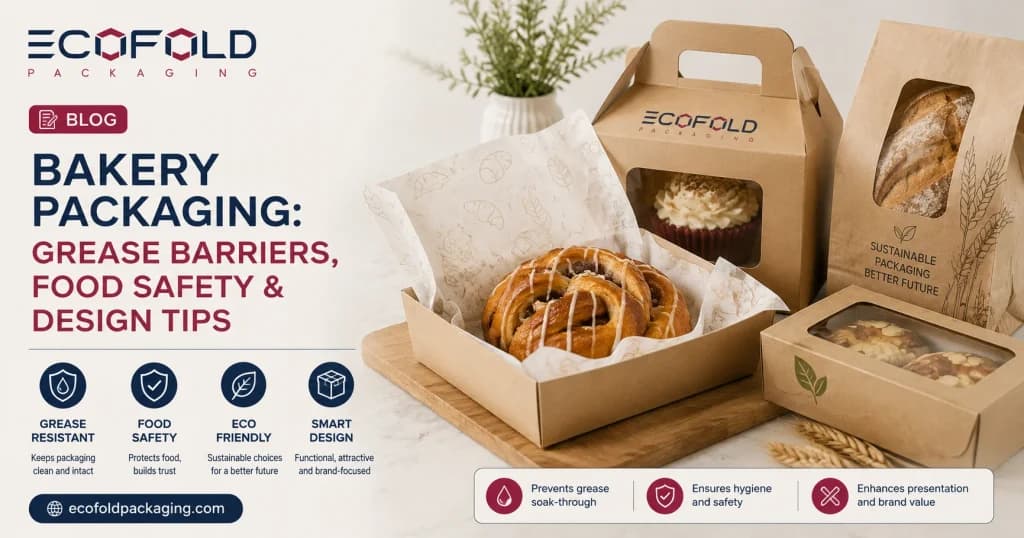
The box that holds a butter-heavy croissant faces a different problem from the box that holds a candle or a piece of jewellery. The main threat is not impact or falling. It is the product itself. Grease and oil from pastries, donuts, cookies, and fried baked goods migrate outward through bakery packaging material.
That migration is a visual problem, a structural problem, and in some configurations a food safety concern. Getting the packaging specification right means solving the grease problem before thinking about branding, color, or box style.
Why Grease Resistance Is the Foundation, Not a Feature
Standard uncoated paperboard, the material used for most retail cartons, gift boxes, and shipping containers, is not designed for food contact or grease exposure.
A plain folding carton with a buttery pastry inside will show grease seepage through the wall within minutes of contact. The exterior darkens, the material softens, and the customer handles a package that appears unsanitary before opening it.
For a counter-service bakery, that visual failure happens in front of the customer. For an ecommerce bakery shipping products, the box arrives damaged.
Neither outcome is acceptable at any price point. The grease barrier is not a premium upgrade. For fatty or oily baked goods, it is the baseline specification. Everything else, the brand design, the finish, the window, the insert, sits on top of that functional decision.
Grease Barrier Options for Bakery Packaging
Several paper treatments and coatings provide grease resistance. Each has a different performance level, sustainability profile, and suitability for different bakery products.
| Barrier Type | How It Works | Best For | Key Note |
| Greaseproof paper | Mechanically dense fiber structure | Pastries, cookies, fried goods, direct contact | No coating needed; printable with food-safe ink |
| Glassine | Dense, smooth, slightly translucent paper | Pastry bags, product interleaving, wrapping | Naturally grease resistant; commonly unprinted |
| Wax-coated paper | Paraffin or soy wax applied to paper surface | Bread wrapping, counter sandwich paper | Light grease and moisture resistance; limits recyclability |
| LDPE-coated paperboard | Polyethylene coating bonded to board | Takeout cartons, hot food boxes | Strong grease and moisture barrier; not curbside recyclable |
| Aqueous coating (AQ) | Water-based coating applied after printing | Outer cartons with indirect food contact | Light grease resistance; keeps board recyclable |
Bakeries using printed wrapping papers, counter liners, or basket papers as part of their food presentation can explore our Custom Printed Papers range for greaseproof, food-grade, and branded wrapping paper options.
Food Safety in Bakery Packaging: What FDA Rules Require
FDA food contact regulations apply whenever packaging material comes into direct physical contact with food. For bakery products, this means any interior surface that the product rests against: the liner of a pastry box, the paper wrap around a loaf, the base of a display tray.
Direct contact surfaces must use materials that will not transfer harmful substances to food at the expected temperature and contact duration. This requirement covers the base paper, any coating or laminate, and any ink printed on the contact side.
Food-safe inks are the most commonly missed specification in bakery packaging design. Standard printing inks are not formulated for food contact. When food-safe inks are not specified, ink components can migrate through paper into warm or oily food products.
Any printing on a surface that directly contacts baked goods must use inks that meet FDA food contact requirements. Outer box surfaces with indirect contact are less regulated but food-adjacent ink specifications are still worth maintaining, particularly for products aimed at children.
Bakeries building a broader food packaging program across multiple product types can explore our Custom Food Boxes range for the food-safe carton options available across counter service, retail, and ecommerce food packaging formats.
Box Styles That Work for Bakery Products
Different bakery products need different structural approaches. The box style decision follows from the product type, the service format, and whether the customer needs to see the product before purchasing.
Auto-lock base boxes for counter-service cake and pastry presentation. The base snaps into shape without tape and allows one-handed handling, which matters in a busy counter environment. This is the most practical construction for high-volume counter service.
Window boxes with PET film panel for products where visibility sells the item at the shelf or counter. Macarons, cupcakes, decorated cakes, and layered bars all benefit from a window that lets the customer see what they are buying.
The window should be positioned to frame the product from the viewing angle the customer naturally holds the box, not just cut as a square in the center of the front panel.
Tuck-end cartons for packaged cookies, brownies, and portioned baked goods sold through retail grocery channels. The folding carton is the standard format for shelf-stable bakery retail packaging and prints full-color branding on all sides.
Clamshell containers for grab-and-go individual items: single muffins, a few cookies, a slice of loaf. The hinged lid keeps the product visible and accessible without requiring a separate lid removal step.
Design Tips That Help Bakery Packaging Sell
Bakery packaging sells on appetite appeal before it sells on brand recognition. The design decisions that matter most in this category are color, typography, and the product display window.
Warm tones (red, orange, deep yellow, and cream) are associated with warmth, freshness, and baked goods. Artisan and traditional bakeries use these alongside craft textures and hand-drawn illustration styles.
Modern or health-positioned bakeries use cleaner palettes, usually cool neutrals or soft greens, that signal ingredients and process rather than indulgence. The palette should match the product positioning.
Typography for artisan bakeries reads better in serif or hand-script typefaces that carry a sense of craft and history. A clean sans-serif system works for modern, minimalist, or health-focused positioning. Combining a hand-script brand name with a clean sans-serif for product details is a widely used pairing that works across most retail contexts.
For cakes and layered items, the most compelling photography or illustration angle is slightly from the side, showing the layers. For cookies and textured items, the top face showing the texture sells better than a straight-on box shot.
Getting this angle right in the artwork is what converts a customer at the shelf. Our guide on Packaging Colors That Sell covers how color selection communicates product identity and drives purchase decisions across different retail environments.
Common Bakery Packaging Mistakes
- Specifying the wrong grease barrier for the product fat content. Aqueous coating on the outer carton does not protect against direct grease contact. Greaseproof paper or glassine is required for the food-contact surface.
- Getting the box height wrong. Layered cakes, stacked cookies, and tall pastries all have specific height requirements. A box that compresses the product ruins the presentation and can damage decorated surfaces.
- Using non-food-safe inks on direct contact surfaces. This is a food safety compliance issue, not just a design consideration. A liner or interior wrap between the product and any non-compliant surface is the common workaround, but specifying compliant inks from the start is cleaner.
- Over-packaging simple items. A single cookie in a multi-layer gift box setup costs more per unit than the margin supports for a counter-service price point. Match the packaging investment to the price point and occasion.
- Not accounting for humidity on bread and soft bakery products. Airtight packaging traps moisture and accelerates mold in soft baked goods. Bread bags and bread box packaging typically need micro-perforation or breathable material to allow moisture to escape.
Bakeries evaluating whether their current packaging materials support recyclability or compostability claims can review our guide on What Makes Packaging Truly Eco-Friendly for the specific material and finish combinations that preserve or eliminate recyclability in food packaging programs.
Frequently Asked Questions
What makes bakery packaging food-safe?
Food-safe bakery packaging uses base materials, coatings, and inks that meet FDA food contact requirements and will not transfer harmful substances to food at the expected temperature and contact conditions.
What is a grease barrier in bakery packaging?
A grease barrier is a material property or coating that prevents oil and fat from migrating through paper packaging. Options include greaseproof paper, glassine, wax-coated paper, and LDPE-laminated board, each with different performance levels and sustainability profiles.
Which box style is best for bakery counter service?
Auto-lock base boxes are the most practical for counter service because they assemble quickly without tape and can be handled one-handed during busy service periods. Window styles are added when the product needs to be visible before purchase.
Do bakery boxes need special food-safe inks?
Any printing on a surface that comes into direct contact with food should use inks formulated to FDA food contact standards. Standard printing inks are not food-safe and can migrate into warm or fatty food products.
How can bakeries make packaging more sustainable?
FSC-certified paperboard, aqueous coating instead of plastic lamination (where grease resistance allows), and soy-based food-safe inks are the most practical sustainability steps for bakery packaging.