
Guides
Eco-Friendly Packaging: What Most Brands Get Wrong
By Ahmad Shoukat · July 2, 2026
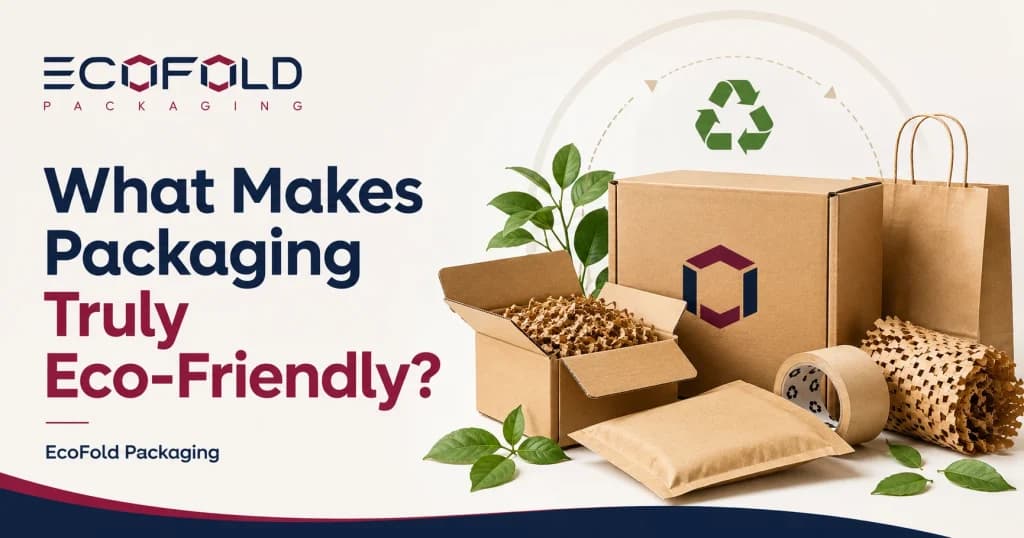
Most packaging that gets labeled eco-friendly is telling half the story. A kraft box looks natural. A biodegradable plastic bag sounds responsible. A paper mailer stamped with a leaf logo feels clean. None of those things make the packaging genuinely low-impact.
The actual environmental picture of any piece of packaging depends on what it is made from, how it is made, what happens to it after use, and whether the infrastructure exists to process it properly.
This is an honest look at what eco friendly packaging actually involves, where the common misconceptions come from, and what brands can do to think more clearly about their packaging choices.
Eco-Friendly Is Not One Standard
Eco-friendly is not a regulated term in the United States. Any brand can use it on packaging without meeting a specific certification or standard. What the term loosely describes is packaging that causes less environmental harm than a conventional alternative.
But less harm along what dimension, compared to what alternative, measured at which point in the product’s lifecycle, is almost never specified.
Sustainable packaging can mean several different things depending on who is using the term:
- Recyclable: can be processed into raw materials at end of life, given the right collection and sorting infrastructure in the area where it is disposed
- Biodegradable: will break down into natural substances over time, but this can mean years or decades depending on the material and conditions
- Compostable: breaks down within a specific timeframe into non-toxic organic material under specific conditions, with third-party certification confirming it
- Reduced material: uses less packaging per product than conventional equivalents, which is often the most impactful change a brand can make
- FSC-certified: the raw material came from responsibly managed forests, which is a supply-chain claim, not an end-of-life claim
Each of these is a different claim about a different part of the packaging lifecycle. A product can be FSC-certified and still not be recyclable in most US cities.
A product can be compostable and still require industrial composting access that is not available in most markets. Treating these as equivalent claims is how greenwashing gets built into packaging decisions without anyone intending it.
What Recyclable Really Means in Practice
Recyclable packaging means the material can, in theory, be processed back into raw materials after use. Whether it actually gets recycled depends on three things: whether the consumer sorts it correctly, whether local collection infrastructure accepts it, and whether there is a market for the recycled material at that point in time.
Paper and cardboard have some of the highest recycling rates in the US. Corrugated cardboard consistently achieves recovery rates above 90 percent, partly because the commercial collection infrastructure is well established. Standard paper-based retail packaging, including folding cartons and paperboard, is widely recyclable in most US markets, as long as certain conditions are met.
The most common barrier to recycling paper-based packaging is what has been applied to the surface after manufacturing. A plain kraft or SBS carton is typically recyclable. The same carton with a plastic laminate bonded to the exterior is much harder to process, because the plastic and paper layers cannot be efficiently separated at most recycling facilities. The base material alone does not determine recyclability. The full specification does.
Biodegradable and Compostable Are Not the Same Thing
These two terms get used interchangeably in packaging marketing. They describe genuinely different outcomes.
Biodegradable means the material will eventually break down through natural biological processes. The problem is that eventually can mean anything. Most petroleum-based plastics technically biodegrade, just over hundreds of years. The term is unregulated and routinely appears on packaging that provides no meaningful environmental benefit over conventional materials.
Compostable is considerably more specific. Industrial compostable packaging must meet ASTM D6400 in the US and break down within 90 to 180 days under industrial composting conditions: controlled temperature, moisture levels, and microbial activity. Home compostable standards allow longer timeframes. Third-party certification from organizations like the Biodegradable Products Institute (BPI) or OK Compost confirms compliance.
The practical limitation of compostable packaging is the same as recyclable: the right infrastructure must exist where the packaging is disposed. Compostable packaging that ends up in a landfill does not compost. A sealed landfill lacks the oxygen and microbial activity that composting requires.
Brands choosing compostable materials should confirm that industrial composting access is realistic in their primary markets before making it part of their packaging story.
Where Kraft and Paper-Based Packaging Actually Stand
Paper-based packaging is probably the most straightforward category in the eco-friendly conversation. Paper is a renewable resource, can be sourced from responsibly managed forests, biodegrades in most environments, and is recyclable in the broadest range of US markets. It is also the material most brands think of first when they want to move away from plastic packaging.
Kraft paper specifically uses unbleached or partially bleached wood pulp produced through the kraft chemical process, which retains more of the natural lignin in the fiber. This gives it the characteristic brown color and makes it stronger than regular paper. Kraft is commonly used for cartons, bags, and food packaging, and when left uncoated, it is widely recyclable and biodegrades without leaving harmful residue.
Brands use kraft packaging for practical and brand-identity reasons: it performs well, it prints cleanly for 1 to 4 color designs, and the natural appearance communicates a positioning that natural, artisan, and wellness brands consistently want. Packaging options like Kraft Boxes are used across food, personal care, and retail product categories for exactly this combination of reasons.
The eco-friendly credentials of kraft hold when the packaging stays close to its natural form. Apply a full plastic laminate and the recyclability drops significantly. Add foil stamping at high coverage and the deinking process at the recycling facility becomes more complex. Kraft is not eco-friendly by default. The finish specification matters as much as the base material.
What Coatings, Laminates, and Finishes Do to Recyclability
This is the detail that most eco-friendly packaging conversations skip. A sustainable substrate can become a more difficult-to-recycle product depending on what is applied to its surface.
Aqueous coating (AQ): water-based, applied in a thin layer, generally compatible with standard paper recycling. The most recyclable finish option available for folding cartons.
Plastic lamination (gloss or matte film): a thin layer of plastic bonded to the print surface. Most US recycling systems cannot separate this from the paper fiber efficiently. A laminated carton is typically not accepted in standard paper recycling streams.
Soy-based and water-based inks: lower VOC emissions than petroleum-based inks and easier to remove during the deinking stage at a recycling facility. The most recyclable ink options for paper packaging.
Foil stamping: a metallic film pressed onto the surface. At low coverage areas, this is generally acceptable in paper recycling. At high coverage, it increases the complexity of processing at recycling facilities.
Brands asking whether their packaging is eco-friendly should ask specifically which coatings and finishes are included, not just what the base material is. Uncoated or aqueous-coated paper packaging is significantly more recyclable than the same packaging with a plastic laminate, even when the base material is identical. Brands exploring paper-based options for their product line can look at Custom Eco Friendly Boxes to understand what material and finish combinations are available.
The Case for Corrugated Packaging
Corrugated cardboard deserves its own mention because it is one of the most successfully recycled packaging materials in the United States, and this is often underappreciated in the eco-friendly packaging conversation.
Commercial recycling infrastructure for corrugated has been established for decades. The material is accepted at most curbside and commercial collection programs. Recovery rates are consistently high. Corrugated board is also commonly made with significant recycled fiber content already built in. The fluted core construction can be produced from recovered paper, and the packaging provides strong shipping and handling protection without requiring heavy board weight.
For outer shipping packaging and heavier products that need structural support in transit, Corrugated Boxes often represent a more practical eco-friendly choice than rigid paperboard, particularly when the box is right-sized to minimize empty space inside.
Can Printed Packaging Still Be Eco-Friendly?
Yes, with conditions that are worth understanding before the specification is finalized.
Full-color CMYK print on paper or paperboard does not prevent recycling. The deinking process at paper recycling facilities is designed to handle printed fiber. Water-based and soy-based inks are particularly compatible with this process and produce lower VOC emissions during printing compared to petroleum-based inks.
Where printed packaging begins to reduce its eco-friendly profile:
- Heavy metallic ink coverage can leave residue that affects recycled fiber quality
- Spot UV adds a localized plastic layer whose recyclability impact varies by coverage area
- Plastic lamination applied to the full print surface significantly reduces paper recyclability
- Foil stamping at high coverage makes deinking at recycling facilities more complex
A printed retail carton using water-based inks with an aqueous coating on FSC-certified paperboard is a reasonable, practical eco-friendly choice for most retail brands. Each additional finish added on top of that base reduces the recyclability of the package, independent of what the substrate certification says. Custom Retail Boxes can be specified with recyclability in mind by starting with the finish decision rather than treating it as an afterthought.
How Brands Can Make Better Packaging Decisions
The most impactful eco-friendly packaging decision most brands can make is the one that rarely comes up in materials discussions: right-sizing.
A box that is 30 percent larger than the product it holds uses more material than needed, adds shipping weight, and requires more cushioning inside to prevent movement. Reducing box dimensions to a close fit reduces material use, freight cost, and filler packaging in a single decision. This is more impactful than switching the base material from gloss SBS to kraft while keeping the same oversized dimensions.
After right-sizing, the material and specification choices matter:
- Choose a paper-based substrate with FSC certification or recycled content
- Choose coatings and finishes based on what is recyclable in the end consumer’s actual location
- Label the packaging clearly with disposal instructions rather than assuming consumers know what to do
- Confirm material specifications with the supplier, not just general terms like eco-friendly or sustainable
Food brands face an additional variable: food contact safety. Some coatings or finishes that are appropriate for non-food packaging are not approved for direct food contact in the US. Food-contact compliant materials often look similar to non-compliant options but meet FDA material safety requirements that affect which coatings and adhesives can be used. Custom Food Boxes should be specified with food-contact compliance confirmed alongside the eco-friendly material choice.
The Claims Worth Treating With Skepticism
Some language in packaging marketing signals intent more than substance. A few examples worth being careful around:
100% natural: not a regulated packaging term in the US. Natural origin does not equal low environmental impact. Wood pulp is natural. So is petroleum.
Eco-conscious or green: broad claims with no certification or standard behind them. If a brand cannot point to a specific certification, these terms describe a preference, not a verified outcome.
Carbon neutral: often achieved through purchased carbon offsets rather than actual emission reductions. Ask what percentage of the claim comes from process changes versus credits purchased from offset projects.
Plant-based plastics: materials like PLA (polylactic acid) are derived from corn starch and sound sustainable. They are generally not accepted in standard US plastic recycling streams. They require industrial composting to break down properly and perform similarly to regular plastic in a landfill. They are not eco-friendly in the way most consumers assume when they read the label.
Made from recycled materials: a meaningful claim when the recycled content is significant, but a packaging product containing 5 percent recycled fiber described as made from recycled materials is accurate in a technical sense and misleading in a practical one.
The Bottom Line
Eco friendly packaging is not a single product category, a single certification, or a single material. It is a set of decisions made at the raw material level, the finish specification level, the sizing level, and the disposal infrastructure level. Brands that approach it as a single yes-or-no question tend to make marketing decisions rather than meaningful ones.
Getting packaging decisions right requires understanding the full picture rather than defaulting to what looks natural on a shelf or what fits a supplier’s category description. For brands at the beginning of that process, a good starting point is reviewing what Custom Packaging Boxes in USA are available across material types and specifications to understand the range of choices and the trade-offs that come with each one.
Frequently Asked Questions
What does eco-friendly packaging really mean?
There is no single regulated definition. Eco-friendly packaging refers to packaging that causes less environmental harm than a conventional alternative, measured across the full lifecycle: raw material sourcing, production, transportation, use, and end-of-life disposal.
Is recyclable packaging better than biodegradable packaging?
Not always. Recyclable packaging recovers material value by processing waste back into raw materials, but only if the proper collection infrastructure exists where the packaging is disposed.
What materials are commonly used in eco-friendly packaging?
FSC-certified paperboard, unbleached or bleached kraft paper, recycled-fiber corrugated board, and certified compostable packaging materials are the most common.
Can printed packaging still be eco-friendly?
Yes. Printing on paper-based packaging with water-based or soy-based inks does not significantly affect recyclability. The larger factors are the coatings and finishes applied after printing.
How can brands choose the right eco-friendly packaging for their products?
Start with right-sizing the packaging to the product. Then choose an FSC-certified or recycled-content paper-based substrate. Choose finishes based on what is recyclable in the consumer’s actual location rather than what sounds sustainable.